Showing posts with label Middle East. Show all posts

Sunday, July 23, 2017

Turkey Moved More Troops Into Qatar

The slow build-up of Turkish soldiers in Qatar has continued, despite their withdrawal being one of the demands that Saudi Arabia and its allies have insisted Doha complies with before they lift their blockade of the emirate.

The Qatari ministry of defence (MoD) announced on 11 July that a fifth instalment of Turkish soldiers had arrived in Doha to join their comrades at the Tariq bin Zayid Battalion base, under the provisions of the military co-operation agreement signed by the two countries. The ministry released photographs showing Turkish troops disembarking from a Qatar Emiri Air Force (QEAF) C-130J-30 transport aircraft.

The Turkish Armed Forces (TSK) did not confirm the statement, but Turkish newspapers reported on the following day that that a 45-strong commando unit affiliated to the Istanbul-based 1st Army Command had arrived in Doha. The Dogan News Agency (DHA) reported that another contingent of about 25 soldiers from an artillery unit would arrive in Qatar between 16 and 19 July with T-155 Fırtına self-propelled howitzers.

Friday, February 10, 2017

Are Iran and Russia Fighting in Syria?

Between Jan. 23 and 27, 2017, there were reports that Syrian president Bashar Al Assad had suffered a stroke and had to be hospitalized. The usually pro-Assad British newspaper The Independent claimed that the Syrian president was suffering serious psychological strain.

Allegations of a president’s poor health take on extra significance in a Russian proxy state. During the Cold War, the Soviets frequently cited allied leaders’ purported medical and psychological problems when launching military interventions — takeovers, essentially — in the countries of the supposedly-ailing heads of state.

Did the same thing just happen in Syria?

Wednesday, June 22, 2016

Evidence of Wild Fires From Barremian Cretaceous Jordan

Fire in a Weichselia-dominated coastal ecosystem from the Lower Cretaceous (Barremian) of the Kurnub Group in NW Jordan

Authors:

Abu Hamad et al

Abstract:

Large intervals of the Cretaceous are considered as a ‘high-fire’ period in Earth's history. However, so far most studies dealing in greater detail with the fossil evidence of palaeo-wildfires, i.e. fossil charcoal, originate from the northern hemisphere (i.e. North America, Europe, Asia) whereas there are large stratigraphic and geographic gaps on the Cretaceous southern continents. The present paper deals with the fossil contents (plant macro-remains, palynomorphs and charcoal) of a lignite lens from the lower part of the Lower Cretaceous Kurnub Group near King Talal Dam in Jordan. The data provide evidence for the repeated occurrence of palaeo-wildfires in coastal ecosystems on the northern margin of Gondwana during the Barremian. The fossil content of the lens indicates that the vegetation, which was repeatedly affected by fire, has been dominated by the matoniaceous tree fern Weichselia reticulata. Palynological data from the lignite, as well as the repeated occurrence of wildfires point to an at least seasonally dry (or at least less humid) climate during deposition of the lignite.

Sunday, May 08, 2016

Climate Change Likely to Cause Mass Exodus From Middle East

The number of climate refugees could increase dramatically in future. Researchers of the Max Planck Institute for Chemistry and the Cyprus Institute in Nicosia have calculated that the Middle East and North Africa could become so hot that human habitability is compromised. The goal of limiting global warming to less than two degrees Celsius, agreed at the recent UN climate summit in Paris, will not be sufficient to prevent this scenario. The temperature during summer in the already very hot Middle East and North Africa will increase more than two times faster compared to the average global warming. This means that during hot days temperatures south of the Mediterranean will reach around 46 degrees Celsius (approximately 114 degrees Fahrenheit) by mid-century. Such extremely hot days will occur five times more often than was the case at the turn of the millennium. In combination with increasing air pollution by windblown desert dust, the environmental conditions could become intolerable and may force people to migrate.

More than 500 million people live in the Middle East and North Africa - a region which is very hot in summer and where climate change is already evident. The number of extremely hot days has doubled since 1970. "In future, the climate in large parts of the Middle East and North Africa could change in such a manner that the very existence of its inhabitants is in jeopardy," says Jos Lelieveld, Director at the Max Planck Institute for Chemistry and Professor at the Cyprus Institute.

Lelieveld and his colleagues have investigated how temperatures will develop in the Middle East and North Africa over the course of the 21st century. The result is deeply alarming: Even if Earth's temperature were to increase on average only by two degrees Celsius compared to pre-industrial times, the temperature in summer in these regions will increase more than twofold. By mid-century, during the warmest periods, temperatures will not fall below 30 degrees at night, and during daytime they could rise to 46 degrees Celsius (approximately 114 degrees Fahrenheit). By the end of the century, midday temperatures on hot days could even climb to 50 degrees Celsius (approximately 122 degrees Fahrenheit). Another finding: Heat waves could occur ten times more often than they do now.

Tuesday, October 27, 2015

Persian Gulf may Experience Temperatures too High for Human Life on Regular Basis due to Climate Change

Within this century, parts of the Persian Gulf region could be hit with unprecedented events of deadly heat as a result of climate change, according to a study of high-resolution climate models.

The research reveals details of a business-as-usual scenario for greenhouse gas emissions, but also shows that curbing emissions could forestall these deadly temperature extremes.

The study, published today in the journal Nature Climate Change, was carried out by Elfatih Eltahir, a professor of civil and environmental engineering at MIT, and Jeremy Pal PhD '01 at Loyola Marymount University. They conclude that conditions in the Persian Gulf region, including its shallow water and intense sun, make it "a specific regional hotspot where climate change, in absence of significant mitigation, is likely to severely impact human habitability in the future."

Running high-resolution versions of standard climate models, Eltahir and Pal found that many major cities in the region could exceed a tipping point for human survival, even in shaded and well-ventilated spaces. Eltahir says this threshold "has, as far as we know ... never been reported for any location on Earth."

That tipping point involves a measurement called the "wet-bulb temperature" that combines temperature and humidity, reflecting conditions the human body could maintain without artificial cooling. That threshold for survival for more than six unprotected hours is 35 degrees Celsius, or about 95 degrees Fahrenheit, according to recently published research. (The equivalent number in the National Weather Service's more commonly used "heat index" would be about 165 F.)

This limit was almost reached this summer, at the end of an extreme, weeklong heat wave in the region: On July 31, the wet-bulb temperature in Bandahr Mashrahr, Iran, hit 34.6 C -- just a fraction below the threshold, for an hour or less.

But the severe danger to human health and life occurs when such temperatures are sustained for several hours, Eltahir says -- which the models show would occur several times in a 30-year period toward the end of the century under the business-as-usual scenario used as a benchmark by the Intergovernmental Panel on Climate Change.

The Persian Gulf region is especially vulnerable, the researchers say, because of a combination of low elevations, clear sky, water body that increases heat absorption, and the shallowness of the Persian Gulf itself, which produces high water temperatures that lead to strong evaporation and very high humidity.

Saturday, October 10, 2015

Russia's Most Syrian Adventure #8

Su-34 Airstrike:


Quick note.  The Russian smart munitions sure look to my untrained eyes to be far more inaccurate than the smart bombs of the First Gulf War.

The Russians are definitely using cluster munitions.  

The Russians also attacked the base of the US trained Syrian rebels.

There are NUMEROUS videos of  Syrian tanks, APCs and other vehicles getting smashed by TOW missiles.  Rumor has it Saudi Arabia has supplied the Free Syrian Army with 500 missiles. Others state the CIA did it.  This may have a blunting effect on the offensive.

An opinion of what Putin is doing in Syria.

Another is that Russia is retaliating in Syria for what happened in Libya.

Russia is claiming the cost of its intervention in Syria is not high.  Note: they don't seem to be able to afford fighting in Ukraine and Syria at the same time.

Thursday, October 01, 2015

Watch F-22s Deploy From Hawaii to the Middle East


The Russians Most Syrian Adventure #1

The Russians hit the Free Syrian Army.  This is not IS.  Ironically, Lavrov has stated the FSA is NOT a terrorist organization and ought to be included in the talks.

The Russians have stated they will NOT join the US led coalition against IS.

The Russians have stated they will conduct air strikes in Iraq if asked.

They has demanded the West stay out of Assad's air space.  They have deployed antiaircraft missile batteries to support this.

The Russians have stated they have 50 combat aircraft in Syria.  Its unclear what the mix is or if they are just referring to fixed wing planes or both fixed wing and helicopter.

They have conducted another wave of air strikes and at least one attack with helicopters.

Look for some insightful articles on Syria at The Power and the Money.

Friday, September 11, 2015

Kuwait Buys 28 Eurofighter Typhoons

Kuwait has agreed to purchase 28 Typhoon combat jets in a multibillion euro deal with the Italian government, industry sources in the region said Friday.

The deal is still in negotiation but Kuwait has agreed to buy 22 single seat and six twin-seat Typhoons in a government-to-government agreement.

Italian firm Finmeccanica's Alenia Aermacchi division has been leading the Eurofighter effort to sell the Typhoon to the Kuwaitis.

Industry sources said the deal could see the Kuwaitis be the first export customer for the active electronically scanned array (AESA) radar being developed for the jet by Italy's Selex ES.

One industry executive said the agreement is welcome, not least because after a flurry of Middle Eastern successes this year for French rival Dassault with the Rafale, the Kuwaiti decision "reinvigorates other opportunities in the gulf region for Typhoon."


And Boeing gets the boot.  No sale for you!

Wednesday, May 27, 2015

Last Glacial Climatic Impacts on Neanderthal Gazelle Hunting in Israel

Isotopic evidence for Last Glacial climatic impacts on Neanderthal gazelle hunting territories at Amud Cave, Israel

Authors:

Hartman et al

Abstract:

The Middle Paleolithic site of Amud Cave, Israel, was occupied by Neanderthals at two different time periods, evidenced by two chronologically and stratigraphically distinct depositional sub-units (B4 and B2/B1) during MIS 4 and MIS 3, respectively. The composition of both hunted large fauna and naturally-deposited micromammalian taxa is stable at the site over time, despite a ∼10 ky gap between the two occupation phases. However, while gazelle is the most ubiquitous hunted species throughout the occupation, isotopic analysis showed that there is a marked change in Neanderthal hunting ranges between the early (B4) and late (B2/B1) phases. Hunting ranges were reconstructed by comparing oxygen, carbon, and strontium isotopes from gazelle tooth enamel with modern isotope data from the Amud Cave region. This region is characterized by extensive topographic, lithological, and pedological heterogeneity. During the early occupation phase negative oxygen isotope values, low radiogenic 87Sr/86Sr ratios, and low Sr concentrations reveal restricted gazelle hunting in the high elevations west of Amud Cave. In the late occupation phase, hunting ranges became more diverse, but concentrate at low elevations closer to the site. Climatic proxies indicate that conditions were drier in the early occupation phase, which may have pushed gazelle populations into higher, more productive foraging areas. This study showed that Neanderthals adjusted their hunting territories considerably in relation to varying environmental conditions over the course of occupation in Amud Cave. It highlights the utility of multiple isotope analysis in enhancing the resolution of behavioral interpretations based on faunal remains and in reconstructing past hunting behaviors of Paleolithic hominins.

Thursday, April 30, 2015

Dassault on a Roll: Qatar Buys 24 Rafale


Qatar has ended its long-running search for new strike aircraft with the decision to acquire 24 Dassault Rafales for the requirement.

The Gulf state has long been a customer of the French airframer, having previously operated the Mirage F1, Alpha Jet and Mirage 2000.

Flightglobal’s MiliCAS database records Doha as possessing an active inventory of 13 Mirage 2000s and six Alpha Jets.


36 Indian, 36 Egyptian and now 24 from Qatar.  96 fighters.  Not a bad set of orders.

Wednesday, February 18, 2015

Evidence of Domestication of Emmer Wheat From Neolithic Iran

Using new morphological criteria to identify domesticated emmer wheat at the aceramic Neolithic site of Chogha Golan (Iran)

Authors:

Weide et al

Abstract:

Reconstructing the domestication process of cereals is a basic requirement for the understanding of the Early Neolithic in the Near East and how agriculture emerged. Although there is general agreement on the criteria of differentiating wild from domesticated cereals, their application to material from aceramic Neolithic sites is problematic for reasons of preservation and diversity of early transitional chaff remains. In the present study we established an identification key for the distinction of wild and domestic emmer wheat (Triticum turgidum subsp. dicoccoides/dicoccum). General morphological analyses as well as experimental charring and measurements on wild and domestic emmer from the Fertile Crescent were conducted to track the main features that distinguish the two forms. Wild emmer can be differentiated from domestic emmer using longitudinal sections through rachises. The scar morphology of wild emmer specimens with a rough upper abscission scar is distinct from domestic emmer. In addition, two of the measuring tracks distinguish between domestic emmer and its progenitor. These results were applied to archaeological specimens from the aceramic Neolithic site of Chogha Golan (Ilam Province, Iran), which was excavated in 2009 and 2010 by a team of the Tübingen Iranian Stone Age Research Project. The carbonized emmer remains dating to about 9,800 BP comprise domestic-type and wild-type rachises, which is typical for cereal assemblages from aceramic Neolithic deposits.

Monday, January 12, 2015

Evidence of Trade Between Bronze Age Denmark and Mesopotamia


Between Egypt, Mesopotamia and Scandinavia: Late Bronze Age glass beads found in Denmark

Authors:

Varberg et al

Abstract:

New research results from glass beads found in Denmark reveal surprising evidence for contact in the 14th–12th centuries BC between Egypt, Mesopotamia and Denmark, indicating a complex and far-reaching trade network. 290 annular glass beads ranging from dark blue to green, white and yellow, along with four polychrome beads, have been found in 14th–12th century burials from Denmark and Schleswig-Holstein in North Germany. Coming from well dated contexts, twenty-three well-preserved Danish glass beads were chosen for analysis.

Wednesday, November 26, 2014

Israel Still Planning on 50 F-35s Despite Procurement Setback

The Israeli defence establishment is still determined to acquire 50 Lockheed Martin F-35 Lightning II fighters, despite a recent decision by a ministerial committee to reduce the second order to 14 aircraft, defence sources have told IHS Jane's .

The ministerial committee for military acquisitions approved the purchase of 14 F-35s instead of the 31 recommended by Defence Minister Moshe Ya'alon. Together with the 19 that are already on order, the 31 aircraft would allow the Israeli Air Force to form two squadrons with 25 F-35s.

The setback to this plan is a temporary one, defence sources say, as Israel will seek to complete the original acquisition plan by ordering an additional 17 F-35s in 2017, bringing the total number of procured jets up to 50.

Monday, November 17, 2014

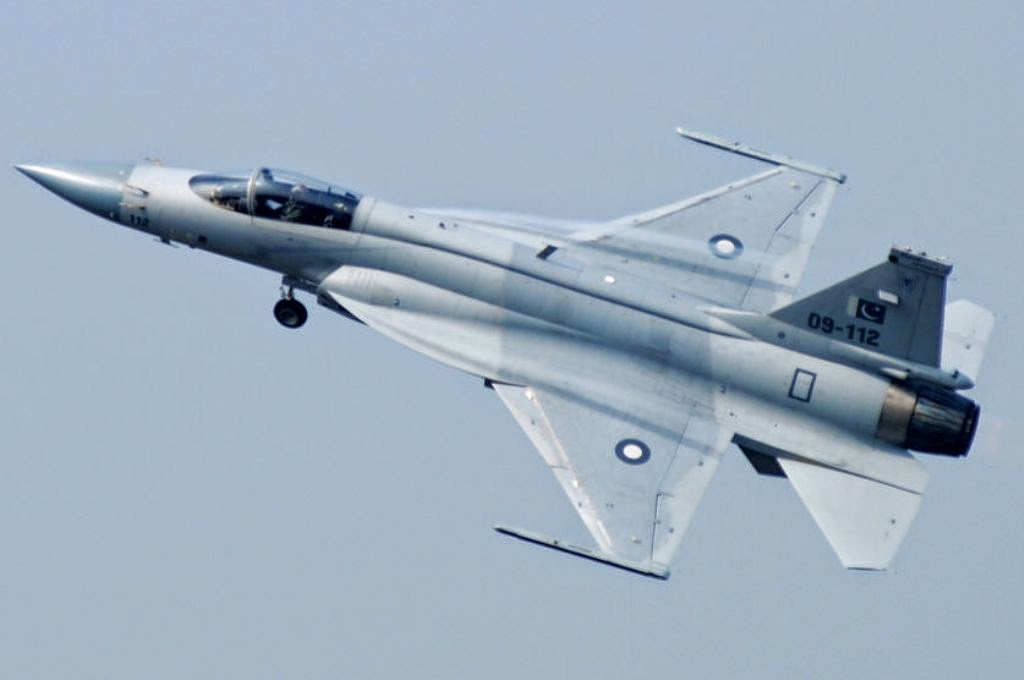
China & Pakistan Negotiating Sale of JF-17 Fighter to Which Middle East Country?


An unidentified Middle Eastern country is in “advanced” talks to make the first foreign purchase of a fighter jet jointly developed by Pakistan and China.

The joint sales team from the Pakistan Air Force and China National Aero-Technology Import and Export Corporation also known as CATIC, are in advanced talks with 10 other countries to sell the JF-17 Thunder, said PAF Air Commodore Khalid Mahmood, who heads sales and marketing for the fighter jet.

“We are in advanced negotiations with a Middle Eastern country, but the political situation over there has delayed the deal,” said Mahmood in an interview at the Zhuhai Air Show yesterday, declining to give more details. “But we still expect them to be our first foreign client.”


The political situation comment doesn't really narrow down the country.

Friday, June 27, 2014

Interesting Chess Move Mr Assad: Syria's Airstrike Complicates Iraq

The brazen attack inside Iraq is a signal how Syria and northern Iraq have devolved into one battlefield, a defense analyst said.

“The border between Syria and Iraq has effectively been erased,” said Colin Kahl, a senior fellow and director of Middle East Security Program at the Center for a New American Security. “There is one battle space, so I would expect that you would see Syrian forces who are battling [ISIL] hit on both sides of the border.”

This is especially complicated should those battles take place in the air. The U.S. is already flying surveillance flights over northern Iraq to monitor movements of ISIL. The U.S. military is also scouting potential targets for airstrikes should President Obama order them.

President Obama said airstrikes are on the table, but yesterday Secretary of State John Kerry said Prime Minister Nouri al-Maliki must pursue a unified government and lessen the Shia influence before U.S. airstrikes would be ordered.

But now Syria has beaten the U.S. to the punch raising the question whether a U.S. airstrike in northern Iraq means the U.S. is supporting Bashar al-Assad’s government in Syria.


Tuesday, June 03, 2014

Dmitry Gorenburg @ Moscow Conference on International Security 2014: Russians on MENA

In addition to the plenary panel, the MCIS conference included two panel discussions, one on the Middle East and North Africa and the second on Afghanistan.

The panel entitled “Finding Ways of Stabilization in the Middle East and North Africa” was moderated by Vitaly Naumkin of the Institute of Oriental Studies. Participants included Deputy Russian Foreign Minister Mikhail Bogdanov, General Vladimir Zarudnitsky — the head of the Main Operational Directorate of the Russian Armed Forces General Staff, Deputy Syrian General Staff Chief Mahmoud Abdul Wahab Shawa. Deputy Director of the Israeli Institute for National Security Udi Dekel, Director of the Iranian Institute for Middle East Strategic Studies Kayhan Barzegar, Chief of Military Intelligence and Counterintelligence of the Lebanese Army Fadel Edmond, and CIS Executive Secretary Sergey Burutin.

Since I am not a MENA specialist, I was primarily interested in how the region influenced Russian foreign policy.

Tuesday, May 13, 2014

Neolithic Spread From the Fertile Crescent Into Asia

The Near-Eastern Roots of the Neolithic in South Asia

Authors:

Gangal et al

Abstract:

The Fertile Crescent in the Near East is one of the independent origins of the Neolithic, the source from which farming and pottery-making spread across Europe from 9,000 to 6,000 years ago at an average rate of about 1 km/yr. There is also strong evidence for causal connections between the Near-Eastern Neolithic and that further east, up to the Indus Valley. The Neolithic in South Asia has been far less explored than its European counterpart, especially in terms of absolute (14C) dating; hence, there were no previous attempts to assess quantitatively its spread in Asia. We combine the available 14C data with the archaeological evidence for early Neolithic sites in South Asia to analyze the spatio-temporal continuity of the Neolithic dispersal from the Near East through the Middle East and to the Indian subcontinent. We reveal an approximately linear dependence between the age and the geodesic distance from the Near East, suggesting a systematic (but not necessarily uniform) spread at an average speed of about 0.65 km/yr.