
Thursday, March 17, 2011


Wednesday, March 16, 2011
Hyperthermal Climate Change Is Periodic?
Bursts of intense global warming that have lasted tens of thousands of years have taken place more frequently throughout history than previously believe, according to evidence gathered by a team led by Scripps Institution of Oceanography, UC San Diego researchers.Richard Norris, a professor of geology at Scripps who co-authored the report, said that releases of carbon dioxide sequestered in the deep oceans were the most likely trigger of these ancient "hyperthermal" events. Most of the events raised average global temperatures between 2° and 3° Celsius (3.6 and 5.4° F), an amount comparable to current conservative estimates of how much temperatures are expected to rise in coming decades as a consequence of anthropogenic global warming. Most hyperthermals lasted about 40,000 years before temperatures returned to normal.The study appears in the March 17 issue of the journal Nature."These hyperthermals seem not to have been rare events," Norris said, "hence there are lots of ancient examples of global warming on a scale broadly like the expected future warming. We can use these events to examine the impact of global change on marine ecosystems, climate and ocean circulation."The hyperthermals took place roughly every 400,000 years during a warm period of Earth history that prevailed some 50 million years ago. The strongest of them coincided with an event known as the Paleocene-Eocene Thermal Maximum, the transition between two geologic epochs in which global temperatures rose between 4° and 7° C (7.2° and 12.6° F) and needed 200,000 years to return to historical norms. The events stopped taking place around 40 million years ago, when the planet entered a cooling phase. No warming events of the magnitude of these hyperthermals have been detected in the geological record since then.Phil Sexton, a former student of Norris' now at the Open University in the United Kingdom, led the analysis of sediment cores collected off the South American coast. In the cores, evidence of the warm periods presented itself in bands of gray sediment layered within otherwise pale greenish mud. The gray sediment contained increased amounts of clay left after the calcareous shells of microscopic organisms were dissolved on the sea floor. These clay-rich intervals are consistent with ocean acidification episodes that would have been triggered by large-scale releases of carbon dioxide. Large influxes of carbon dioxide change the chemistry of seawater by producing greater amounts of carbonic acid in the oceans.The authors concluded that a release of carbon dioxide from the deep oceans was a more likely cause of the hyperthermals than other triggering events that have been hypothesized. The regularity of the hyperthermals and relatively warm ocean temperatures of the period makes them less likely to have been caused by events such as large melt-offs of methane hydrates, terrestrial burning of peat or even proposed cometary impacts. The hyperthermals could have been set in motion by a build-up of carbon dioxide in the deep oceans caused by slowing or stopping of circulation in ocean basins that prevented carbon dioxide release.
No time. Curious though.
Return to the Eternal Unanswerables: Puerto Rico's Status
“For over a century, the people of Puerto Rico and the United States have woven a lasting political, economic, social, and cultural relationship. Today, this relationship is strengthened and renewed by more than four million U.S. citizens who call Puerto Rico home and nearly equal number of Puerto Ricans living on the mainland who travel back to Puerto Rico for business, vacation, or visits to see family and friends,” Obama said in a letter released with the report. “We honor their contributions to the nation and welcome their vigorous participation in helping to develop, shape, and implement the recommendations presented in this report.”The 122-page report places an emphasis on the island’s economic and social issues, but opens with a 7-point series of recommendations on Puerto Rico’s century-old status dilemma.[...]The Task Force recommends that all relevant parties — the president, Congress, and the leadership and people of Puerto Rico — statehood, independence, free association, and commonwealth — and have that will acted upon by the end of 2012 or soon thereafter.The Task Force leans slightly toward a two-tier plebiscite process that “allows the people of Puerto Rico first to vote on the question of whether they wish to be part of the United States or wish to be independent, and then to choose between the available status options, as limited by the outcome of the first vote.”“If the process produces a clear result, Congress should act on it quickly with the president’s support,” the Task Force said.In a position that is sure to ruffle some feathers, the Task Force recommends that only residents of Puerto Rico should be eligible to vote in a status plebiscite.
dundundun.
Here we go again.
Another Stealthy Chinese Fighter?
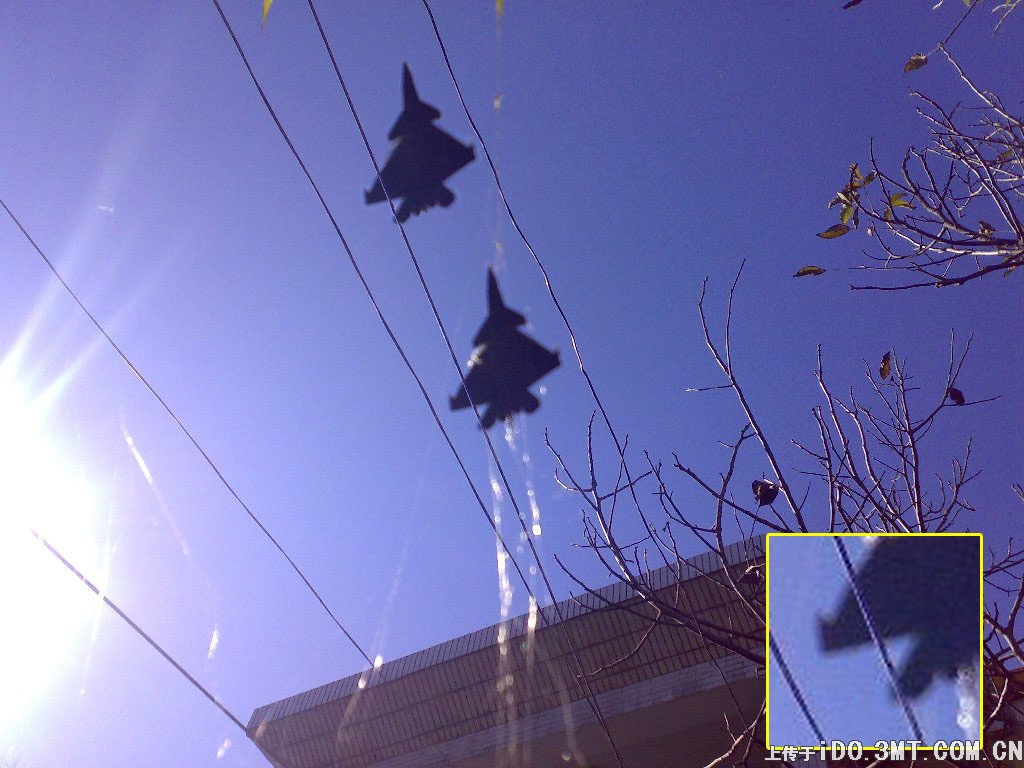
Intriguing, especially since there is the anticipation that more stealth fighters are on their way to be revealed, but at the same time, be aware folks that it is easy to photoshop things these days. This is a flyover in a very populated area, so there ought to be more pix soon.
Mass Preservation of a Mass Migration of Trilobites..doing the naughty
Few specimens inspire greater thrills among fossil collectors than a complete trilobite. These ancient arthropods – relatives of lobsters, spiders and insects – went extinct more than 250 million years ago, but are sometimes found in beautifully preserved condition. In rare instances, an entire population of trilobites is found fossilized together. Carlton E. Brett finds evidence for ancient environment and behavior in these mass graves.Brett, University of Cincinnati professor of geology, will present his findings March 20 at the Geological Society of America regional meeting in Pittsburgh, in a paper co-authored with Adrian Kin of Poland's Institute of Geological Sciences at Jagiellonian University, and Brenda Hunda of the Cincinnati Museum Center.In a quest that has taken him from Oklahoma to Morocco and Poland, Brett has analyzed multiple examples of mass trilobite burial. A smothering death by tons of hurricane-generated storm sediment was so rapid that the trilobites are preserved in life position. These geologic "snapshots" record behavior in much the way that ancient Roman life was recorded at Pompeii by volcanic ash.Burial was rapid, Brett said, but also somewhat delicate. Trilobites, like other arthropods, shed their hard exoskeletons from time to time."We find molted pieces lying immediately adjacent to each other," he said. "This is proof that the sediments were not significantly disturbed after burial."Like modern crabs and lobsters, trilobites appear to have gathered in large groups for protection when they shed their protective exoskeletons. During molting, there was safety in numbers. And, like their modern cousins, trilobites seem to have used these molting gatherings as opportunities for mating.The mass burials preserve large groups of similar-sized – and therefore similarly aged – specimens, segregated by species and, after molting, "naked.""It's an orgy," Brett said.
Note, this is similar to what horseshoe crabs do in modern times. Its described a bit less salaciously though.
Tuesday, March 15, 2011
Supposedly Pure CGI
If true, damned impressive. I have a slightly hard time believing though. With two + months of work? hm.

Monday, March 14, 2011
This Would Explain Much: A Mutation That Allows Less Sleep
For most of us, setting the clock forward in the spring is a sad occasion, a sign that we're losing an hour of sleep.Daylight saving time begins Sunday at 2 a.m. in most of the U.S. -- except for Hawaii and Arizona.But for some genetically blessed people, a loss of one hour of sleep is not a problem. In fact, sleeping fewer than the recommended seven or eight hours is the norm. They naturally feel refreshed and ready to go -- at 4 a.m.These "short sleepers" have a mutation on a gene known as hDEC2, that regulates their sleep-wake cycle. This mutation allows them to function on less sleep, researchers say.
Huh. My dad worked on almost zilch sleep or so it seemed to me when I was a kid -> teen. He'd be in bed late, if I woke up at 2 am he would often be still up, and get up relatively early.
Once I hit my 30s, I started doing this, too; I didn't used to though. In fact, last night I was up until 1:30 AM and got up at 5:30 AM. I'm a bit bleary at first, but I'm more than fully functional by 6 am: I had my family's lunches, breakfasts, and whatnot all done by then as well as having eaten. I've been doing this now for over 3 years as I have pursued the GLXP. I'm tired and sometimes irritable, but I am far more than merely functional, even without caffeine.
I'm also what I've termed an old campaigner to my wife as far as sleep goes. If I lay down and I want to, I go to sleep. This drives my wife nuts. I can get up and take care of something int he middle sleeping and I am back asleep in seconds after laying down.
There are a few times I can't sleep, but they are few and far between. Likewise, I don't start passing out until I've been up for 20 hours now. I can go to sleep earlier, but don't need to. Alnighters are tough though, but then, I am 37 now rather than 19. ;)
I do wonder if I'd test positive for the gene though.
I also wonder about the family's male longevity...despite its very poor lifestyle choices.
Just a Quick Note on Therocephalia

It seems like akidnognathanidae was trying really hard to be the therocephalian equivalent of carnivora and bauriodea was trying to be rodentia.
Parallel evolution and all that.
Interesting.
NOAA Graphics of the Tsunami Wave Height


Thoughts and prayers with the survivors. The bits I have had time to read have been devastating emotionally.
A Bit More J-20 News

For the first time, I've seen a name attached to the J-20: the Black Eagle. Eagle seems to be an obvious and common name for fighters. The F-15 Eagle is the 4th generation American air superiority fighter. The Russians through Sukhoi built the Su-47/S-37 Berkut (or Golden Eagle). Interestingly and somewhat contrary to stereotype, Russian tank project was also called the Black Eagle.
On to the news, The J-20 has been called a production prototype by the Chinese military. Its status whether it was a one off R&D aircraft or a real deal prototype has been in question. It now seems to truly a production prototype. If it is true and their development program goes smoothly enough, they will be set for IOC between 2018 to 2020.
A tangental aspect of the whole hoopla over the J-20 is the policy and politics behind it. There seems to be a question of just how much the Chinese civilian government actually knew about the J-20. Apparently, they gave the impression, right or wrong, that they didn't know about the unveiling of the J-20 to the world when the SecDef Gates came for a visit. This raised the phantom of just how much control the Chinese government has over the PLA. Im unsure how serious to take this, but...it's provocative. One would hope that we are not seeing a Japan pre WW2 developing here. That's both frightening and ironic, if a bit doubtful.
Friday, March 11, 2011
The Future of Black and White
Interesting. Not that different than what I've heard otherwise.
Keep in mind that Benjamin Franklin's writings, he railed against the nonwhite immigrants moving into the US and corrupting its culture. Those immigrants? Germans. Yep. Germans. He considered the English, certain Germans (Saxons, iirc), Dutch and perhaps the Scots to be white. No one else was. 100 years ago, Italians and Irish were not "white" by general American social standards. They are definitely considered such today. What is 'white' and what is not is a moving standard. Dr Lee points that out in an interesting manner.
It appears that the definite of 'white' is moving to encompass asians and latinos. By 2035 or 2040, it may well be that being Mexican is no different than Italian. Or Irish. The differences would absorbed and some kept by society as a whole and some not, just like any other immigrant group in the past once the flow from the point of origin has slowed to a trickle. Had we still be getting waves of Italians from the late 19th century all the way to the present, our societal uneasiness might still be present.
Unfortunately, developments make it look like, as Dr Lee points out again, that white is going to be excluding black in the life trajectories of those within their categories. Listen to the short above. Its a bit depressing. Black is the underclass. Sad and depressing that.
Political Shift Coming to California?

Red denotes relative growth while blue relative loss. It ought to be also noted that the areas that grew faster tend to vote Republican.
Cretaceous Jehol Biota Lived in a Cold Climate
Oxygen isotopes of East Asian dinosaurs reveal exceptionally cold Early Cretaceous climatesAuthors:1. Romain Amiot (a,1,2)2. Xu Wang (b),3. Zhonghe Zhou (a)4. Xiaolin Wang (a)5. Eric Buffetaut(c)6. Christophe Lécuyer(d,2)7. Zhongli Ding(b)8. Frédéric Fluteau(e)9. Tsuyoshi Hibino(f)10. Nao Kusuhashi(g)11. Jinyou Mo(h)12. Varavudh Suteethorn(i)13. Yuanqing Wang(a)14. Xing Xu (a)15. Fusong Zhang(b)Institutions:a) Key Laboratory of Evolutionary Systematics of Vertebrates, Institute of Vertebrate Paleontology and Paleoanthropology, Chinese Academy of Sciences (CAS), 142 Xi Zhi Men Wai DaJie, Beijing 100044, China;b) Key Laboratory of Cenozoic Geology and Environment, Institute of Geology and Geophysics, Chinese Academy of Sciences, 19 Beitucheng Xilu, Beijing 100029, China;c) CNRS (Centre National de la Recherche Scientifique) UMR (Unité Mixte de Recherche) 8538, Laboratoire de Géologie de l’Ecole Normale Supérieure, 24, Rue Lhomond, 75231 Paris Cedex 05, France;d) CNRS (Centre National de la Recherche Scientifique) UMR (Unité Mixte de Recherche) 5125, Université Claude Bernard Lyon 1, 2, Rue Raphaël Dubois, 69622 Villeurbanne Cedex, France;e) Institut de Physique du Globe de Paris, 1 Rue Jussieu, 75238 Paris Cedex 05, France;f) Shiramine Institute of Paleontology, Kuwajima, Hakusan, Ishikawa 920-2502, Japan;g) Department of Earth's Evolution and Environment, Graduate School of Science and Engineering, Ehime University, 2-5 Bunkyo-cho, Matsuyama, Ehime 790-8577, Japan;h) Faculty of Earth Sciences, China University of Geosciences, 388 Lumo Road, Wuhan 430074, China;i)Department of Mineral Resources, Rama VI Road, Bangkok 10400, ThailandAbstract:Early Cretaceous vertebrate assemblages from East Asia and parti- cularly the Jehol Biota of northeastern China flourished during a period of highly debated climatic history. While the unique charac- ters of these continental faunas have been the subject of various speculations about their biogeographic history, little attention has been paid to their possible climatic causes. Here we address this question using the oxygen isotope composition of apatite phos- phate (δ18 Op ) from various reptile remains recovered from China, Thailand, and Japan. δ18Op values indicate that cold terrestrial cli- mates prevailed at least in this part of Asia during the Barremian— early Albian interval. Estimated mean air temperatures of about 10 ` 4 °C at midlatitudes (∼42 °N) correspond to present day cool temperate climatic conditions. Such low temperatures are in agree- ment with previous reports of cold marine temperatures during this part of the Early Cretaceous, as well as with the widespread occurrence of the temperate fossil wood genus Xenoxylon and the absence of thermophilic reptiles such as crocodilians in north- eastern China. The unique character of the Jehol Biota is thus not only the result of its evolutionary and biogeographical history but is also due to rather cold local climatic conditions linked to the paleolatitudinal position of northeastern China and global icehouse climates that prevailed during this part of the Early Cretaceous.
Interesting. And it makes sense. This is not the first time that there has been a deviation from the hot house model for the Cretaceous. I'm reading the paper slowly because I have a lot to do. However, take a look. Link in the title, as always.
Thursday, March 10, 2011
Old: Rainforest Collapse Drove Reptile Evolution
Global warming devastated tropical rainforests 300 million years ago. Now scientists report the unexpected discovery that this event triggered an evolutionary burst among reptiles -- and inadvertently paved the way for the rise of dinosaurs, 100 million years later.This event happened during the Carboniferous Period. At that time, Europe and North America lay on the equator and were covered by steamy tropical rainforests. But when the Earth's climate became hotter and drier, rainforests collapsed, triggering reptile evolution.Dr Howard Falcon-Lang of Royal Holloway, University of London, UK explained: "Climate change caused rainforests to fragment into small 'islands' of forest. This isolated populations of reptiles and each community evolved in separate directions, leading to an increase in diversity."Professor Mike Benton of the University of Bristol, UK added: "This is a classic ecological response to habitat fragmentation. You see the same process happening today whenever a group of animals becomes isolated from its parent population. It's been studied on traffic islands between major road systems or, as Charles Darwin famously observed in the Galapagos, on oceanic islands."Ms Sarda Sahney, also of the University of Bristol, UK said: "It is fascinating that even in the face of devastating ecosystem-collapse, animals may continue to diversify through the creation of endemic populations." However, she warned that: "Life may not be so lucky again in the future, should the Amazon rainforest collapse."To reach their conclusions, the scientists studied the fossil record of reptiles before and after rainforest collapse. They showed that reptiles became more diverse and even changed their diet as they struggled to adapt to rapidly changing climate and environment.
Single Atom Memory Bits?

One of the building blocks for the next generation of quantum computing and communications systems is a way of storing and regenerating photonic qubits. These are generally encoded in the polarisation of photons.To date, physicists have done this by transferring the qubit from a photon to an ensemble of quantum particles such as a crystal lattice or a small cloud of atoms.Today, Holger Specht and pals at the Max Planck Institute for Quantum Optics in Garching, Germany, have gone one better. They've found a way to store the qubit from a polarised photon in a single atom of rubidium and then release it again later.The trick here is first to find an atom with the suitable two-level state that will absorb photons in the right way and second, to find a way to force the photon to give up its qubit to the atom.It turns out that rubidium has the just right energy levels. Specht and co force the atom and photon to interact by trapping them in a high quality mirrored cavity in which the photon can enter but not easily escape. It then rebounds inside until it gives up its goods to the atom.To accept the qubit, the atom first has to be placed in the right state by a weak laser beam. A second laser beam later forces the atom to spit out the qubit in the form of an identical polarised photon.The result is a single atom memory that can read, store and write quantum information.
no time.
Wednesday, March 09, 2011
The Probability of an Earth Analog
Title: The Occurrence Rate of Earth Analog Planets Orbiting Sunlike StarsAuthors: Joseph Catanzarite and Michael Shao, Jet Propulsion Laboratory, California Institute ofTechnologySummary paragraphKepler is a space telescope that searches Sun-like stars for planets. Its major goal is to determine ߟா௧, the fraction of Sunlike stars that have planets like Earth. When a planet ‘transits’ or moves in front of a star, Kepler can measure the concomitant dimming of the starlight. From analysis of the first four months of those measurements for over 150,000 stars, Kepler’s science team has determined sizes, surface temperatures, orbit sizes and periods for over a thousand new planet candidates. Here, we show that 1.4% to 2.7% of stars like the Sun are expected to have Earth analog planets, based on the Kepler data release of Feb 2011. The estimate will improve when it is based on the full 3.5 to 6 year Kepler data set. Accurate knowledge of ߟா௧ is necessary to plan future missions that will image and take spectra of Earthlike planets. Our result that Earths are relatively scarce means that a substantial effort will be needed to identify suitable target stars prior to these future missions.
Again, no time.
Chemical Warfare, 256 AD

Almost 2,000 years ago, 19 Roman soldiers rushed into a cramped underground tunnel, prepared to defend the Roman-held Syrian city of Dura-Europos from an army of Persians digging to undermine the city's mudbrick walls.But instead of Persian soldiers, the Romans met with a wall of noxious black smoke that turned to acid in their lungs. Their crystal-pommeled swords were no match for this weapon; the Romans choked and died in moments, many with their last pay of coins still slung in purses on their belts.Nearby, a Persian soldier — perhaps the one who started the toxic underground fire — suffered his own death throes, grasping desperately at his chain mail shirt as he choked.These 20 men, who died in A.D. 256, may be the first victims of chemical warfare to leave any archaeological evidence of their passing, according to a new investigation. The case is a cold one, with little physical evidence left behind beyond drawings and archaeological excavation notes from the 1930s. But a new analysis of those materials published in January in the American Journal of Archaeology finds that the soldiers likely did not die by the sword as the original excavator believed. Instead, they were gassed.
no time, but kewl.
Tuesday, March 08, 2011
Stealth Aircraft Round Up

Japan plans to fly a prototype by 2014. That's pretty ambitious. See a bit more here.
Apparently, the Russians are planning midlife (or early life) engine upgrade for the PAK-FA/T-50 fighter once it is in frontline service. Supposedly, the avionics of the PAK-FA are ... incredible. Not necessarily in a positive meaning of that word...The Russians are also working on the PAK-DA program to build a new bomber by 2017. There's a bit of an update over the older information here.
Somehow I missed posting this earlier, but the Chinese may have other stealth aircraft to reveal here shortly beyond the J-20.
India is now working on (besides the PAK-FA with the Russians) an equivalent of the F-35. Its very early in the game, but...
The US has kicked off a relatively near term next gen bomber program (and here). The idea being to actually start fielding the bomber circa 2018, if I am reading this stuff right. That's shockingly quick given the timeline for the F-22 development (1983-2005? IOC), F-35 (1995-2015+ IOC) and others. In fact, this very aggressive timeline has led to a lot of speculation that the airframe has already flown (and originally here) and that all they are doing is ironing out the bits requiring integration rather than developing new tech. There is a lot of speculation as to what the capabilities will be: lasers? drone control? hypersonic missiles (in a role like the SRAM)? What is its true purpose as well?
Japan. Russia. China. India. USA. Where is Europe?
Friday, March 04, 2011
Thursday, March 03, 2011
Evidence of Sea Faring NorAms Over 11,000 Years Ago?
Evidence for a diversified sea-based economy among North American inhabitants dating from 12,200 to 11,400 years ago is emerging from three sites on California's Channel Islands.Reporting in the March 4 issue of Science, a 15-member team led by University of Oregon and Smithsonian Institution scholars describes the discovery of scores of stemmed projectile points and crescents dating to that time period. The artifacts are associated with the remains of shellfish, seals, geese, cormorants and fish.Funded primarily by grants from the National Science Foundation, the team also found thousands of artifacts made from chert, a flint-like rock used to make projectile points and other stone tools.Some of the intact projectiles are so delicate that their only practical use would have been for hunting on the water, said Jon Erlandson, professor of anthropology and director of the Museum of Natural and Cultural History at the University of Oregon. He has been conducting research on the islands for more than 30 years."This is among the earliest evidence of seafaring and maritime adaptations in the Americas, and another extension of the diversity of Paleoindian economies," Erlandson said. "The points we are finding are extraordinary, the workmanship amazing. They are ultra thin, serrated and have incredible barbs on them. It's a very sophisticated chipped-stone technology." He also noted that the stemmed points are much different than the iconic fluted points left throughout North America by Clovis and Folsom peoples who hunted big game on land.The artifacts were recovered from three sites that date to the end of the Pleistocene epoch on Santa Rosa and San Miguel islands, which in those days were connected as one island off the California coast. Sea levels then were 50 to 60 meters (about 160-200 feet) below modern levels. Rising seas have since flooded the shorelines and coastal lowlands where early populations would have spent most of their time.Erlandson and his colleagues have focused their search on upland features such as springs, caves, and chert outcrops that would have drawn early maritime peoples into the interior. Rising seas also may have submerged evidence of even older human habitation of the islands.
no time.

Wednesday, March 02, 2011
Has a 6th Been Added to the Big Five Mass Extinctions?
With the steep decline in populations of many animal species, from frogs and fish to tigers, some scientists have warned that Earth is on the brink of a mass extinction like those that occurred only five times before during the past 540 million years.Each of these 'Big Five' saw three-quarters or more of all animal species go extinct.In a study to be published in the March 3 issue of the journal Nature, University of California, Berkeley, paleobiologists assess where mammals and other species stand today in terms of possible extinction, compared with the past 540 million years, and they find cause for hope as well as alarm."If you look only at the critically endangered mammals – those where the risk of extinction is at least 50 percent within three of their generations – and assume that their time will run out, and they will be extinct in 1,000 years, that puts us clearly outside any range of normal, and tells us that we are moving into the mass extinction realm," said principal author Anthony D. Barnosky, UC Berkeley professor of integrative biology, a curator in the Museum of Paleontology and a research paleontologist in the Museum of Vertebrate Zoology."If currently threatened species – those officially classed as critically endangered, endangered and vulnerable – actually went extinct, and that rate of extinction continued, the sixth mass extinction could arrive within as little as 3 to 22 centuries," he said.Nevertheless, Barnosky added, it's not too late to save these critically endangered mammals and other such species and stop short of the tipping point. That would require dealing with a perfect storm of threats, including habitat fragmentation, invasive species, disease and global warming,"So far, only 1 to 2 percent of all species have gone extinct in the groups we can look at clearly, so by those numbers, it looks like we are not far down the road to extinction. We still have a lot of Earth's biota to save," Barnosky said. "It's very important to devote resources and legislation toward species conservation if we don't want to be the species whose activity caused a mass extinction."Coauthor Charles Marshall, UC Berkeley professor of integrative biology and director of the campus's Museum of Paleontology, emphasized that the small number of recorded extinctions to date does not mean we are not in a crisis."Just because the magnitude is low compared to the biggest mass extinctions we've seen in a half a billion years doesn't mean to say that they aren't significant," he said. "Even though the magnitude is fairly low, present rates are higher than during most past mass extinctions.""The modern global mass extinction is a largely unaddressed hazard of climate change and human activities," said H. Richard Lane, program director in the National Science Foundation's Division of Earth Sciences, which funded the research. "Its continued progression, as this paper shows, could result in unforeseen – and irreversible – negative consequences to the environment and to humanity."The study originated in a graduate seminar Barnosky organized in 2009 to bring biologists and paleontologists together in an attempt to compare the extinction rate seen in the fossil record with today's extinction record. These are "like comparing apples and oranges," Barnosky said. For one thing, the fossil record goes back 3.5 billion years, while the historical record goes back only a few thousand years. In addition, the fossil record has many holes, making it is impossible to count every species that evolved and subsequently disappeared, which probably amounts to 99 percent of all species that have ever existed. A different set of data problems complicates counting modern extinctions.Dating of the fossil record also is not very precise, Marshall said."If we find a mass extinction, we have great difficulty determining whether it was a bad weekend or it occurred over a decade or 10,000 years," he said. "But without the fossil record, we really have no scale to measure the significance of the impact we are having."To get around this limitation, Marshall said, "This paper, instead of calculating a single death rate, estimates the range of plausible rates for the mass extinctions from the fossil record and then compares these rates to where we are now."Barnosky's team chose mammals as a starting point because they are well studied today and are well represented in the fossil record going back some 65 million years. Biologists estimate that within the past 500 years, at least 80 mammal species have gone extinct out of a starting total of 5,570 species.The team's estimate for the average extinction rate for mammals is less than two extinctions every million years, far lower than the current extinction rate for mammals."It looks like modern extinction rates resemble mass extinction rates, even after setting a high bar for defining 'mass extinction,'" Barnosky said.
In short, yes. A bit longer answer, it started over 30k years ago and is anthropogenic in nature.
I have a post that is in very early form on this, but it will be a while before it sees the light of day.


Tuesday, March 01, 2011
Devonian GeoSys-BioEvo Interaction Bun Fight

There's an interesting bun fight that has started. It has to do with whether or not there is a correlation between the rapid rise in oxygen during the Devonian and the evolution of large bodied predatory fish. Oxygen levels did, in fact, rise significantly during the Devonian. Large bodied fish that filled the predator niche also arose then.
This has been playing out in PNAS. The original paper raised the suggestion that there was a direct correlation. A researcher wrote an objection. The original researchers responded.
There is a long ongoing argument about how much the environment and the geophysical systems influence evolution. Some feel that it has overwhelming evidence in support of this. The idea that the environment is the driver of evolution is very common. Sometimes a change in climate would be a driver in evolution: the general cooling and drying at the end of the Eocene and into the Oligocene, for example. Others, as above, have suggested that the oxygen levels have been another driver. Desertification, temperature rise, etc have all been pitched as important drivers.
Others have some strong objections to this. Butterfield is a good example above. Another noted individual that you may recognize is John Hawks. He frequently objects to the idea that the environment was the driver behind human evolution.
I have to wonder. There are times when I object too when it seems like the authors are overstretching. That seems to happen alot in this realm. The grand handwave seems to be pretty common, nevermind those details. On the other hand, it seems hard to deny that the environment isn't one of the greatest, if not the greatest driver of evolution. It can and does wipe out populations of various species. It has wiped out whole ecosystems before, thereby terminating their participation in following evolutionary tales.
Sometimes the objections seem silly. Sometimes the handwavium is near violating causality. Either way, I caution that people ought to look at the details before objecting or accepting a theory.
The Next Paleo Posts
Given the limited feedback I've received, I'm working on two paleo posts.
The first is the therocephalian overview; however, the theros are more diverse than either the dicyns or the gorgons. There appear to be five clades worth detailing and that will require more work with less material than on the gorgons or the dicyns.
The second post will be on the archaen environment, if I can get to it. I am rather busy with the team phoenicia stuff these days.
Monday, February 28, 2011
Friday, February 25, 2011

Wednesday, February 23, 2011

Tuesday, February 22, 2011
A Small Stealth Aircraft Update: J-20 And More


A couple of nifty pix here. The first is a quick and dirty guide to the different generations of aircraft. It ought to be noted that there are no European - as in nonRussian European - aircraft past Gen 4, and there are none currently planned. Europeans are working on stealthy drones like the US is, but no further manned aircraft.
The second is a lengthwise comparison of the three Gen 5 air superiority (assuming that is what the J-20 is) fighters. More and more pix of the T-50 are arising and its looking more and more that this first T-50 is not stealthy whatsoever. That would disqualify it from the Gen 5 category by itself. However, this T-50 prototype could be the equivalent of the YF-22: there were significant changes between the YF-22 and the F-22A. It could be that the Russians wanted to test fly their airframe design earlier than their composites tech would allow. The Soviets had a plan of test flying iterative improvements. Perhaps this is what the Russians are doing.
A bit of news is that India's equivalent of the F-35 has revealed itself a tad bit more. Read more here. It is in the very, very early stages and will take a while to be fielded. The Tejas took over twenty years to go from the stage that the AMCA is to IOC. Note: the F-22 program started around 1981 and the IOC was 2005. Glass houses, eh?
Thursday, February 17, 2011
The Big Thing Off (sorta) My Plate

One of the big things that I have gotten off my plate was raising the $50,000 fee for the Google Lunar X Prize entry that we were attempting. In this economy it has been more than a challenge. It was more than stressful, frankly, and it almost didn't happen. The very last cheque was signed at 2:20 PM on the last day it was possible to turn it in when the flight for the courier was at 3 PM from San Jose to LAX to hand deliver the money by 6 PM. The journey that he went through to get it there was something that ought to be an adventure novel in and of itself.
There have been massive personal problems happening during the time frame that the fund raising was happening. It was really tough. Excruciatingly tough. I honestly didn't know if I would keep together pretty much anything since we were in such bad shape at times. Honestly, I almost came apart at the seams, frankly.
Some say the great thing is not to lose your nerve. Others say man up. Some say to stop whining. Others still say less talk, more do.
We did 'do.' Big time.
This has been a huge deal for me. I've been working towards this point for three years. It's a midway point through the project. There are a lot of very exciting developments that I cannot talk about here nor will I. However, let's just say even if we never land on the Moon, we will have won this competition hands down.
Hands down.
And some day, I'll explain that.
Wednesday, February 16, 2011
The 600 Million Year Old Ediacaran "Lantian Biota"

(seaweed?)
Almost 600 million years ago, before the rampant evolution of diverse life forms known as the Cambrian explosion, a community of seaweeds and worm-like animals lived in a quiet deep-water niche under the sea near what is now Lantian, a small village in Anhui Province of South China. Then they simply died, leaving some 3,000 nearly pristine fossils preserved between beds of black shale deposited in oxygen-free waters.Scientists from the Chinese Academy of Sciences, Virginia Tech in the U.S., and Northwest University in Xi'an, China report the discovery of the fossils and the mystery in the Feb. 17 issue of Nature. *In addition to perhaps ancient versions of algae and worms, the Lantian biota – named for its location – included macrofossils with complex and puzzling structures. In all, scientists identified about 15 different species at the site.The fossils suggest that morphological diversification of macroscopic eukaryotes – the earliest versions of organisms with complex cell structures -- may have occurred only tens of millions of years after the snowball earth event that ended 635 million years ago, just before the Ediacaran Period. And their presence in the highly organic-rich black shale suggests that, despite the overall oxygen-free conditions, brief oxygenation of the oceans did come and go."So there are two questions," said Shuhai Xiao, professor of geobiology in the College of Science at Virginia Tech. "Why did this community evolve when and where it did? It is clearly different in terms of the number of species compared to biotas preserved in older rocks. There are more species here and they are more complex and larger than what evolved before. These rocks were formed shortly after the largest ice age ever, when much of the global ocean was frozen. By 635 million years ago, the snowball earth event ended and oceans were clear of ice. Perhaps that prepared the ground for the evolution of complex eukaryotes."The team was examining the black shale rocks because, although they were laid down in waters that were not good for oxygen-dependent organisms, "they are known to be able to preserve fossils very well," said Shuhai. "In most cases, dead organisms were washed in and preserved in black shales. In this case, we discovered fossils that were preserved in pristine condition where they had lived – some seaweeds still rooted."The conclusion that the environment would have been poisonous is derived from geochemical data, "but the bedding surfaces where these fossils were found represent moments of geological time during which free oxygen was available and conditions were favorable. They are very brief moments to a geologist," said Xiao. "but long enough for the oxygen-demanding organisms to colonize the Lantian basin and capture the rare opportunities."The research team suggests in the article in Nature that the Lantian basin was largely without oxygen but was punctuated by brief oxic episodes that were opportunistically populated by complex new life forms, which were subsequently killed and preserved when the oxygen disappeared. "Such brief oxic intervals demand high-resolution sampling for geochemical analysis to capture the dynamic and complex nature of oxygen history in the Ediacaran Period," said lead author Xunlai Yuan, professor of palaeontology with the Chinese Academy of Sciences.
WORMS! THAR BE WORMS! *AND*SEAWEED*
Link to the paper tomorrow: An Early Ediacaran Assemblage of Macroscopic and Morphologically Differentiated Eukaryotes.


Been Sick
I am finally off my back. I'll get to posts soon.
Huge announcement coming out tomorrow. It's been embargoed until then.
Thursday, February 10, 2011
The X-37B Started the Fire

The USAF is prepping their second X-37B for its flight. The flight of the first X-37B caused a stir. It has made the world wonder about what its meant for. The USAF stated that it was a tech demo mission carrying new technologies to be flight tested. Whatever it may officially is said to be, the USAF now seems to have a new spy plane/easily retaskable satellite that can be brought back and reconfig'ed really, really easily.
China and Russia expressed their misgivings about the X-37B, calling it unnecessary and provocative.
Interestingly, China has now claimed that they are working on their own as a response. It has been met with doubts by the milbloggers. This seems to be consistent with their commentary about ASAT and ABM weaponry while pursuing their own. Their efforts culminated in the infamous Jan 11, 2007 ASAT test[1]. Condemn and develop is a consistent pattern here.
Likewise, the Russians have claimed that they have a spacecraft along these lines already. This, too, has been met with skepticism. The Russians had been doing a lot of spaceplane development almost 30 years ago, including the Buran (now in a junkyard) and MiG-105. However, that was ages ago and under the auspices of the Soviet Union. I doubt that they have the personnel, tooling or knowledge base from back then to do the work. However, I have been wrong before and could be again.
1. It produced an interesting diplomatic response from the US that we are aware of because of the wikileaks fiasco and in turn an ASAT demo by a standard missile off of a US cruiser
Wednesday, February 09, 2011
The Postcranial Anatomy of Suminia getmanovi (Synapsida: Anomodontia)
The postcranial anatomy of Suminia getmanovi (Synapsida: Anomodontia), the earliest known arboreal tetrapodJÖRG FRÖBISCH, ROBERT R. REISZArticle first published online: 21 JAN 2011DOI: 10.1111/j.1096-3642.2010.00685.xAbstract:The basal anomodont Suminia getmanovi Ivakhnenko, 1994 from the late Palaeozoic of Russia is highly specialized in its masticatory apparatus, and has been suggested to represent the earliest arboreal tetrapod in the fossil record. Its postcranial anatomy is described in detail for the first time, revealing a large number of autapomorphies for this small herbivore. These include a reduced number of presacral and therein dorsal vertebrae, an elongate neck, a long and possibly prehensile tail, a procoracoid with a notch at its ventromedial margin rather than a foramen, an iliac blade with a robust ridge at its anteromedial edge, a pubis with a puboischiadic fenestra and separate pubic foramen, and elongate limbs. Additional autapomorphic characters are displayed in the autopodium, which comprises about 40% of the entire limb length. These features include an enlarged, phalangiform distal carpal 1 and tarsal 1, a short and robust first metacarpal, a crescent-shaped distal tarsal 4, and elongate penultimate phalangeal elements. The phylogenetic relationships of basal anomodonts are revisited using an expanded data set, with the addition of key taxa and several postcranial characters. Unlike dicynodonts, Suminia retained the plesiomorphic phalangeal formula for amniotes of 2-3-4-5-3 (manus) and 2-3-4-5-4 (pes). This pattern is achieved by the retention of disc-like phalangeal elements between the proximal and penultimate phalanges in digits III, IV (manus and pes), and V (pes only). In light of the new material, Suminia can be recognized as the most complete basal anomodont, offering new insights into the early evolution of the group.
Awesome. More related to this...sometime. lol.
J-20 Round Up: What's New Since My Last Post
There has been a big gap since I posted about the J-20. A lot of things have happened and some new info and some new blog posts are out and about. I thought I'd work up a put up a links post for those that read the blog and are interested in the more recent thoughts since what I'd put up.
First up, some purty pix:

Bottom views from left to right of the J-20, T-50 and F-22.
Note: not properly scaled.

The J-20 looks similar to the original planform of the JSF entry by Lockheed.
Note: no accusation they copied the early JSF entry, more like parallel evolution

An attempt at figuring out the actual length of the J-20 vs the F-22.
Did China Steal US Stealth Tech?
Offiziere.ch offers up an opinion on whether or not the F-117 shootdown on March 27, 1999 in the Kosovo War provided China with their materials tech to produce their own native stealth. The China Military Report rebutted that China doesn't need 30+ year old tech to do the above. If the F-117 contributed anything to the J-20 - I honestly don't know - then it would have been used as a starting place rather than a blatant cut and paste of technology. The CMR is correct that it is VERY outdated material science, but given that the information would be examined by individuals with lots of experience with composite technologies and whatnot that have been developed since, they could come up with similar and improved materials based on the observed characteristics of the F-117 samples. There are reasons why I watch my own composite samples very, very closely when dealing with others.
J-20 DID take to the Skies.
Nice photos from China Defense Blog.
Another set of photos via Avweek: they have a youtube video, too.
Notice the size difference between the J-10 fighter (an very, very rough analog of the F-16) and the J-20. The J-20 is a BIG beast, relatively speaking.
Bill Sweetman with his opinions on the flight ought to be viewed here.
The Pooh-Pooh Brigade:
No sooner than the world reacted strongly to the J-20 than out came those that puh-puhed the development of the J-20. It's not THAT big a deal they stated. Don't overreact. Here are some of their commentaries.
David Axe argues that American drones are far more important the the rise of the J-20 in the grand scheme of things. He also argues about what the real cost of the J-20 will be and that buying it will weaken the Chinese military somewhere else.
The Avweek crew argue that the J-20 is vulnerable to a host of sensors that the US is deploying now because tech has marched on in the sensor world since the 1990s. In many ways, this sounds like the arguments that were trotted out against the American stealthy aircraft in the 1990s though.
In the Speculation Department:
The Dew Line wonders if the J-20 is meant to be another tool to try to push the USN away from the Chinese coasts. In that vein, the USNI blog comments on how the differences between the US view of Chinese capabilities and the Chinese goals. The perception is pretty significant.
War Is Boring puts up another post similar to what I wrote about the coming manned 5th generation fighters as a contrast to the J-20, but with more detail. It also notes that the US is starting to define its 5.5 gen or 6th gen fighter requirements even before the J-20 was unveiled.
David Fulghum at Avweek speculates that there are more stealth designs coming from the Chinese in the near future.
In the Recap Department:
The Dew Line brings up a video from Singapore about the J-20 activities.
And I seem to have misplaced the last post I planned on including. ah well.
Dear Readers: What Do You Want To See First?
I accomplished some major milestones last week and this cleared off my plate some serious stress and time consumption. It will be replaced with more in the very near future. However, I have a window of time that I can work on other things. I have promised that I would return to doing some paleo posts here.
I have a number of half or three quarters finished posts. I'm considering which ones to finish up and bring online. I'd like to get some feedback from my readers to see what they would like to have first. IDK if I will get to two posts, but I will try. Here are the lists of the ones that are in production that you all can vote on:
1. Not Your Father's Archean: This is about the new research that indicates that the archaen was not what we had thought it was.
2. A Fully Functional Mass Extinction: Talks about the definitions of a mass extinction, its misuse, how they 'work' and some annoying things that scientists and nonscientists ought to avoid when discussing them.
3. The Great Harrowing: The Sixth Mass Extinction: Talking about the mass extinction(s) that are combined into what is being called the Sixth. This clarifies the extinctions that took place at the Pliocene-Pleistocene boundary, the Pleistocene-Holocene, and the ongoing one.
4. An unnamed therocephalian post: This would return to talking about the nonmammalian therapsids like I did with the gorgonopsids and the dicynodonts.
5. An unnamed Xenopermian post: This talks about the environments of the places that we will be highlighting in the ongoing xenopermian alternate paleohistory project.
Pick two please.
One for your first choice that I will get done.
A second for what you'd like me to get to after if I have time.
oy, the embarassment
My IT guy decided to be obnoxious and detail what happened. It became a post on tuaw. Looking at the comments though this one stood out and I could NOT stop laughing so hard that people swarmed my office.
As a former owner of a PT Cruiser, I can safely say the iPad probably did more damage to the car than the other way around.
Soooooooo fscking true. My hat's off, FearlessFreep. You have spoken so much truth.
Tuesday, February 08, 2011
Chitin Remnants in Paleozoic Fossils
Surprising new research shows that, contrary to conventional belief, remains of chitin-protein complex—structural materials containing protein and polysaccharide—are present in abundance in fossils of arthropods from the Paleozoic era. Previously the oldest molecular signature of chitin-protein complex was discovered in 25 million year old Cenozoic fossils and remnants of structural protein have also been discovered in 80 million-year-old Mesozoic fossils. Carnegie's George Cody and an international team of scientists discovered relicts of protein-chitin complex in fossils of arthropods from the Paleozoic era. Their findings, published online by Geology, could have major implications for our understanding of the organic fossil record.Among other common features, arthropods have exoskeletons, or cuticles. The outer portions of these cuticles are made up of a composite of chitin fibers, which are embedded in a matrix of protein. It is well known that chitin and structural protein are easily degraded by microorganisms and it has long been believed that chitin and structural proteins would not be present in fossils of moderate age, let alone in fossils dating back to the early Paleozoic.Cody and his team studied fossil remains of a 310-million-year-old scorpion cuticle from northern Illinois and a 417-million-year-old eurypterid—an extinct scorpion-like arthropod, possibly related to horseshoe crabs—from Ontario, Canada. Using sophisticated analytical instrument at the Advanced Light Source facility, the research team measured the absorption spectra of low-energy X-rays by carbon, nitrogen, and oxygen in the fossils. These measurements were taken at a resolution on the order of 25 nanometers. The researchers showed that the majority of carbon, nitrogen and oxygen found in these fossils from the Paleozoic era were derived from a protein-chitin complex. Not surprisingly, the protein-chitin material was somewhat degraded, either by chemical processes or partial bacterial degradation.
They used the day job's Advanced Light Source for their work. Awesome. :)
Monday, February 07, 2011
Deep Breath
ok. Sorta back. Will start spinning things up again.
Oh, and folks, scarlet fever has made an appearance in NorCal. The hospital was surprised since they've not seen it before. So was my daughter.
blah.
As if Strep wasn't bad enough!
I am going to be getting back on my feet, blogwise and lifewise. We had two major milestones accomplished in the past month, too. A lot more soon.
Subscribe to:
Posts (Atom)