Tuesday, August 28, 2012

There's Only 2/3rds the Biomass

Previous estimates about the total mass of all life on our planet have to be reduced by about one third. This is the result of a study by a German-US science team published in the current online issue of Proceedings of the National Academy of Science (PNAS).

According to previous estimates about one thousand billion tons of carbon are stored in living organisms, of which 30% in single-cell microbes in the ocean floor and 55 % reside in land plants. The science team around Dr. Jens Kallmeyer of the GFZ German Research Centre for Geosciences and University of Potsdam has now revised this number: Instead of 300 billion tons of carbon there are only about 4 billion tons stored in subseafloor microbes. This reduces the total amount of carbon stored in living organisms by about one third.

Previous estimates were based on drill cores that were taken close to shore or in very nutrient-rich areas. "About half of the world's ocean is extremely nutrient-poor. For the last 10 years it was already suspected that subseafloor biomass was overestimated" explains Dr. Jens Kallmeyer the motivation behind his study. "Unfortunately there were no data to prove it". Therefore Kallmeyer and his colleagues from the University of Potsdam and the University of Rhode Island, USA, collected sediment cores from areas that were far away from any coasts and islands. The six-year work showed that there were up to one hundred thousand times less cells in sediments from open-ocean areas, which are dubbed "deserts of the sea" due to their extreme nutrient depletion, than in coastal sediments.

With these new data the scientists recalculated the total biomass in marine sediments and found these new, drastically lower values.

Monday, August 27, 2012

Lowest Polar Ice Coverage Ever..and its dropping


The melt season will be going for another couple weeks still.  This is truly frightening. 

A Paleocene Pangolin Relative From China?

 (Ernanodon antelios, bottom)
Shortly after dinosaurs like Tyrannosaurus and Triceratops went extinct 65 million years ago, Earth's ancient landscapes were filled with unusual mammals only distantly related to those alive today. Until recently, one of these creatures, Ernanodon antelios, was only known from a single, highly distorted specimen that raised many questions about its habits and evolutionary relationships. In the most recent issue of the Journal of Vertebrate Paleontology, scientists describe a second specimen of Ernanodon that sheds new light on this curious beast from the dawn of the "Age of Mammals."

The remarkable new skeleton comes from rocks in Mongolia that were deposited 57 million years ago during a period known as the Paleocene Epoch.

"Ernanodon is a unique find and represents one of the most complete skeletons ever collected from the Paleocene of the Naran Bulak locality," said Alexander Agadjanian of the Borissiak Paleontological Institute of the Russian Academy of Sciences, co-author of the study.

The first specimen was discovered by a team of Soviet paleontologists in 1979 but remained unstudied for more than thirty years. The new specimen preserves most of the arms, legs, and backbone of the badger-sized animal, including many bones that were not preserved in the first specimen. The authors of the new study made detailed comparisons among the bones of Ernanodon and those of modern mammals and concluded that Ernanodon was highly specialized for digging. It may have dug for food, for shelter, or both.

"Only a handful of Asian Paleocene mammals are known by their postcranial skeleton, which makes Ernanodon a unique source of very important information about its habits, lifestyle, and affinities," said Peter Kondrashov of A.T. Still University of Health Sciences, lead author of the study.

The strong limbs and large claws of Ernanodon, combined with its unusual, simplified teeth, have caused much confusion about its evolutionary relationships. Some scientists thought Ernanodon was an ancient relative of modern armadillos and anteaters, whereas other scientists thought Ernanodon was more closely related to a group of African and Asian ant-eating mammals known as pangolins or "scaly anteaters." The new study concludes that Ernanodon was a closer relative of pangolins than armadillos and anteaters, but that it represents a very early side branch of the pangolin family tree.

"Few other fossil mammals presented as many controversies in the scientific world as Ernanodon did and we are glad the new skeleton helped us resolve them," Kondrashov added.

Monday, August 20, 2012

Next Discovery Mission is to Mars


Via the planetary society.

A link to the InSight probe info.

A bummer that TiME didn't get it.  That'd have been uber awesome, but given that Mars has been taking a hit with the budget cuts...

Do Aphids Photosynethesize?


The biology of aphids is bizarre: they can be born pregnant and males sometimes lack mouths, causing them to die not long after mating. In an addition to their list of anomalies, work published this week indicates that they may also capture sunlight and use the energy for metabolic purposes.

Aphids are unique among animals in their ability to synthesize pigments called carotenoids. Many creatures rely on these pigments for a variety of functions, such as maintaining a healthy immune system and making certain vitamins, but all other animals must obtain them through their diet. Entomologist Alain Robichon at the Sophia Agrobiotech Institute in Sophia Antipolis, France, and his colleagues suggest that, in aphids, these pigments can absorb energy from the Sun and transfer it to the cellular machinery involved in energy production.


Light- induced electron transfer and ATP synthesis in a carotene synthesizing insect

Authors:

1. Jean Christophe Valmalette (a)
2. Aviv Dombrovsky (b,d)
3. Pierre Brat (c)
4. Christian Mertz (c)
5. Maria Capovilla (d)
6. Alain Robichon (d)

Affiliations:

a. IM2NP UMR 7334 CNRS, Université du Sud Toulon Var, P.O. Box 20132, 83957 La Garde CEDEX, France

b. Volcani Center, Institute of Plant Protection, P.O. Box 6, 50250 Bet Dagan, Israel

c. CIRAD UMR QualiSud, 73 rue J.F. Breton, TA B-95/16, 34398 Montpellier CEDEX 5, France

d. UMR7254 INRA/CNRS/UNS, Institut Sophia Agrobiotech, 400 route des Chappes, P. O. Box 167, 06903 Sophia Antipolis, France

Abstract:

A singular adaptive phenotype of a parthenogenetic insect species (Acyrthosiphon pisum) was selected in cold conditions and is characterized by a remarkable apparition of a greenish colour. The aphid pigments involve carotenoid genes well defined in chloroplasts and cyanobacteria and amazingly present in the aphid genome, likely by lateral transfer during evolution. The abundant carotenoid synthesis in aphids suggests strongly that a major and unknown physiological role is related to these compounds beyond their canonical anti-oxidant properties. We report here that the capture of light energy in living aphids results in the photo induced electron transfer from excited chromophores to acceptor molecules. The redox potentials of molecules involved in this process would be compatible with the reduction of the NAD+ coenzyme. This appears as an archaic photosynthetic system consisting of photo-emitted electrons that are in fine funnelled into the mitochondrial reducing power in order to synthesize ATP molecules.

hmmmm.

Kids with Lizards


Some things reach across generations it seems.  Yes, they caught them themselves.

Thursday, August 16, 2012

Pelycosaur Found in Nova Scotia (either Sphenacodont or Edaphosaurid)

(partially intact rib cage)
A Nova Scotia family out for a walk with their dog has stumbled upon what the province is calling its most significant fossil find.

Patrick Keating and his wife Susie were walking their dog Kitty last month along the Northumberland Shore when something caught their eye.

“(It) looked like a chicken breast, you know, encapsulated in rock. But it was interesting once we found out what it was,” said Susie Keating.

It turned out to be the partial sail, ribcage and backbone of the sail-back reptile, the first to be found in Nova Scotia, the provincial government said in a press release.

"This is a great day for Nova Scotians and the world," Minister of Communities, Culture and Heritage Leonard Preyra said in a statement.

A week later, while walking along the same stretch of beach, the family found the animal’s skull, believed to be 290 million to 305 million years old.

Patrick's brother brought the fossil to the Nova Scotia Museum, which promptly gave it a nickname -- Superstar

“When I finally saw a picture all I could think of was, ‘Oh my God, oh my God,’ because this is part of the missing piece of the puzzle that we're putting together based on the fossils we're finding here in Nova Scotia,” said Ken Adams, Director of Fundy Geological Museum.

Palaeontologists knew the sail-back, a mammal-like reptile, once roamed these parts because in 1994 footprints were found in Nova Scotia's Colchester County, and isolated bones were discovered in 1845 in Prince Edward Island.

Sail-back reptiles have been found in Texas and Europe, which were attached to Nova Scotia more than more than 300 million years ago before the tectonic plates beneath them shifted.

Link (video on the other side of link). 

Is this actually a Dimetrodon?  The video clip shows the museum display with a diagram that highlights the portions found on a dimetrodon skeleton.  So, yes?  No?

Wednesday, August 15, 2012

Triassic-Jurassic Boundary Extinction had Nasty, Anoxic Seas


The global mass extinction that ended the Triassic – and ushered in the Jurassic - was marked by inhospitable, sulphurous seas all around the coast, according to a new study.

While life on land seems to have been recovering, repeated poisoning of shallow seas with hydrogen sulphide knocked back the recovery of marine life during the early Jurassic. And some experts say a build-up of noxious gas could happen again.

“These coastal seas were stinking fouling seas, very unpleasant to higher life forms,” said Bas van de Schootbrugge of Goethe University Frankfurt, an author of the study published in Nature Geoscience.

[...]

Life in the Triassic world had already been decimated by catastrophic volcanic eruptions which swept in a period of high carbon dioxide levels and global warming. A fall in oxygen levels at sea and global warming led rising hydrogen sulphide levels in the shallow seas, a hotbed of marine biodiversity during this time.

“We have conclusively shown for the first time that bottom waters were strongly anoxic [low in oxygen] and rich in hydrogen sulphide directly after the mass-extinction event. Our data show that the environmental impact was of a much longer duration [than previously thought],” said van de Schootbrugge. And the lack of oxygen would have inhibited the recovery of life, prolonging the environmental misery at sea.

The scientists studied sediments from northern Germany and Luxemburg buried during at the Triassic-Jurassic boundary; they used geochemical analyses to fingerprint fossilised pigments used exclusively by green sulphur bacteria.

These bacteria live under conditions of zero oxygen but high concentrations of hydrogen sulphide. “Imagine a shallow sea where the bottom waters of up to about 20 metres under the surface are devoid of oxygen,” said Schootbrugge, describing this as bad news for corals and bivalves.
Link.  Awaiting paper.

Tuesday, August 14, 2012

Hiding in Plain Sight: Interparietal Still Present in Mammals


Although clearly discernible in the embryo, shortly afterwards it fuses with other bones beyond recognition. Consequently, researchers have often missed it. Now, however, paleontologists from the University of Zurich have rediscovered it: the "os interparietale," a skull bone also referred to as the interparietal. Using imaging methods, they were able to detect its presence in all mammals -- including humans, which is new as it was previously believed to have been lost in the course of evolution.

The mammalian skull, including that of people, is composed of about 20 bones. Fish, reptile and bird skulls, however, have considerably more. After all, when mammals evolved from reptile-like vertebrates 320 million years ago, the skull's structure became simplified during its development and the number of skull bones decreased.

Some bones were lost in the lineage leading to mammals in the course of evolution, especially a number of skull roof bones. The skull's interparietal, which is one of the skull roof bones, particularly puzzled researchers: on the one hand, it seems to have survived, such as in humans, carnivores and ungulates (especially horses); on the other hand, it is not found in all mammals.

Together with a colleague from the University of Tübingen, Marcelo Sánchez, a professor of paleontology at the University of Zurich, and post-doctoral student Daisuke Koyabu have now detected the presence of the interparietal after all: Studying fossils and embryos of over 300 species of vertebrate, they were able to identify the bone in all of them. They used non-invasive micro-CT imaging to analyze rare embryos of different species from museum collections. "The interparietal was clearly discernible in specimens from the embryonic period as the skull bones were fused less strongly here," explains Sánchez. At the same time, he sees the fact that the bone is only clearly and easily discernible in the embryonic period as the reason why previous researchers failed to recognize it: "It would seem that many anatomists have overlooked the presence of the interparietal in numerous mammalian lineages as the bone becomes fused to other skull bones during growth and is unrecognizable in adult individuals."

Something to chew on for those that do the skeletal recons...

Link.

Thursday, August 09, 2012

Mars Has Plate Techtonics

For years, many scientists had thought that plate tectonics existed nowhere in our solar system but on Earth. Now, a UCLA scientist has discovered that the geological phenomenon, which involves the movement of huge crustal plates beneath a planet's surface, also exists on Mars.

"Mars is at a primitive stage of plate tectonics. It gives us a glimpse of how the early Earth may have looked and may help us understand how plate tectonics began on Earth," said An Yin, a UCLA professor of Earth and space sciences and the sole author of the new research.

Yin made the discovery during his analysis of satellite images from a NASA spacecraft known as THEMIS (Time History of Events and Macroscale Interactions during Substorms) and from the HIRISE (High Resolution Imaging Science Experiment) camera on NASA's Mars Reconnaissance Orbiter. He analyzed about 100 satellite images — approximately a dozen were revealing of plate tectonics.

Yin has conducted geologic research in the Himalayas and Tibet, where two of the Earth's seven major plates divide.

"When I studied the satellite images from Mars, many of the features looked very much like fault systems I have seen in the Himalayas and Tibet, and in California as well, including the geomorphology," said Yin, a planetary geologist.

For example, he saw a very smooth, flat side of a canyon wall, which can be generated only by a fault, and a steep cliff, comparable to cliffs in California's Death Valley, which also are generated by a fault. Mars has a linear volcanic zone, which Yin said is a typical product of plate tectonics.

"You don't see these features anywhere else on other planets in our solar system, other than Earth and Mars," said Yin, whose research is featured as the cover story in the August issue of the journal Lithosphere.

The surface of Mars contains the longest and deepest system of canyons in our solar system, known as Valles Marineris (Latin for Mariner Valleys and named for the Mariner 9 Mars orbiter of 1971󈞴, which discovered it). It is nearly 2,500 miles long — about nine times longer than the Earth's Grand Canyon. Scientists have wondered for four decades how it formed. Was it a big crack in Mars' shell that opened up?

"In the beginning, I did not expect plate tectonics, but the more I studied it, the more I realized Mars is so different from what other scientists anticipated," Yin said. "I saw that the idea that it is just a big crack that opened up is incorrect. It is really a plate boundary, with horizontal motion. That is kind of shocking, but the evidence is quite clear.

"The shell is broken and is moving horizontally over a long distance. It is very similar to the Earth's Dead Sea fault system, which has also opened up and is moving horizontally."

The two plates divided by Mars' Valles Marineris have moved approximately 93 miles horizontally relative to each other, Yin said. California's San Andreas Fault, which is over the intersection of two plates, has moved about twice as much — but the Earth is about twice the size of Mars, so Yin said they are comparable.

Yin, whose research is partly funded by the National Science Foundation, calls the two plates on Mars the Valles Marineris North and the Valles Marineris South.

"Earth has a very broken 'egg shell,' so its surface has many plates; Mars' is slightly broken and may be on the way to becoming very broken, except its pace is very slow due to its small size and, thus, less thermal energy to drive it," Yin said. "This may be the reason Mars has fewer plates than on Earth."

Mars has landslides, and Yin said a fault is shifting the landslides, moving them from their source.

Does Yin think there are Mars-quakes?

"I think so," he said. "I think the fault is probably still active, but not every day. It wakes up every once in a while, over a very long duration — perhaps every million years or more."

Yin is very confident in his findings, but mysteries remain, he said, including how far beneath the surface the plates are located.

"I don't quite understand why the plates are moving with such a large magnitude or what the rate of movement is; maybe Mars has a different form of plate tectonics," Yin said. "The rate is much slower than on Earth."

The Earth has a broken shell with seven major plates; pieces of the shell move, and one plate may move over another. Yin is doubtful that Mars has more than two plates.

"We have been able to identify only the two plates," he said. "For the other areas on Mars, I think the chances are very, very small. I don't see any other major crack."
Link. Paper link.

Is the Prince Albert Crater in Canada a Mesozoic or Paleozoic Impact?


This is the Prince Albert Impact Crater.  It was found two years ago, but new information has reevaluated some of the initial results.  Originally, it was thought to be between 150 to 130 million years old.  This has now been broadened to 350 to 130 million years old.  That's...interesting.  Flickr gallery.

Monday, August 06, 2012

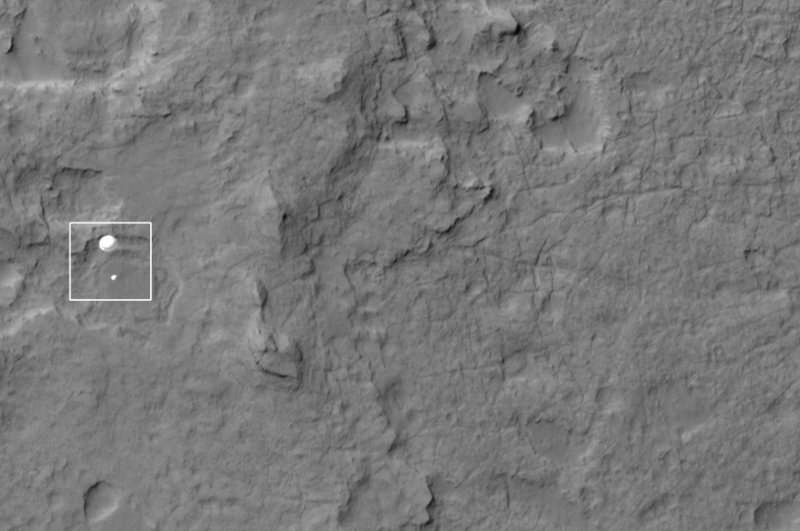
Curiosity Descent Images

You've seen this one:


That's the image of Curiosity landing on Mars as seen by an orbiter (Odyssey).

But...there's this too:


Its the camera on the bottom of the rover recording the descent.

Friday, August 03, 2012

Keegan Has Died


Rest in Peace.


I always found his portrayal of Grant to be rather interesting and different than what I grew up with.  I have not as yet read his last book on the US Civil War.

Boeing, SpaceX & Sierra Nevada Win Commericial Crew Contracts


Did I call it or what?

Boeing got $440 million for their CST-100.  SpaceX got $420 million for the Dragon.  Sierra Nevada got $212 million.

Innovative, but sure (SpaceX).  Dinospace but likely to succeed (Boeing).  And "sexy" or "kewl," SN.

There were some rumors floating around (when aren't there?) that the White House delayed the announcement because they were unhappy with the decision.  The rumor was that ATK had won something and that the WH didn't like it.  The only way that works now that the awards are out is that they had hoped that ATK had won and that it didn't...

ATK may continue, albeit slower, according public statements.

Congratz, folks.  Let's see Americans going up in American spacecraft again.

Thursday, August 02, 2012

Something that Made me Smile

Biotic Multipliers: Species Interactions are Very Important in Extinction Scenarios

Global warming may cause more extinctions than predicted if scientists fail to account for interactions among species in their models, Yale and UConn researchers argue in in the journal Science.

“Currently, most models predicting the effects of climate change treat species separately and focus only on climatic and environmental drivers,” says Phoebe Zarnetske, the study’s primary author and a postdoctoral fellow at the Yale School of Forestry & Environmental Studies. “But we know that species don’t exist in a vacuum. They interact with each other in ways that deeply affect their viability.”

Zarnetske said the complexity of “species interaction networks” discourages their inclusion in models predicting the effects of climate change. Using the single-species — or “climate envelope” — approach, researchers have predicted that 15% to 37% of species will be faced with extinction by 2050.

But research has shown that top consumers — predators and herbivores — have an especially strong effect on many other species. In a warming world, these species are “biotic multipliers,” increasing the extinction risk and altering the ranges of many other species in the food web.

“Climate change is likely to have strong effects on top consumers. As a result, these effects can ripple through an entire food web, multiplying extinction risks along the way,” says Dave Skelly, a co-author of the study and professor of ecology at Yale.

The paper argues that focusing on these biotic multipliers and their interactions with other species is a promising way to improve predictions of the effects of climate change, and recent studies support this idea. On Isle Royale, an island in Lake Superior, rising winter temperatures and a disease outbreak caused wolf populations to decline and the number of moose to surge, leading to a decline in balsam fir trees. In the rocky intertidal of the North American Pacific Coast, higher temperatures altered the ranges of mussel species and their interaction with sea stars, their top predators, resulting in lower species diversity. And in Arctic Greenland, higher temperatures led to decreased diversity in tundra plants without the presence of caribou and muskoxen and, in turn, affected many other species dependent on them.

“Species interactions are necessary for life on Earth. We rely on fisheries, timber, agriculture, medicine, and a variety of other ecosystem services that result from intact species interactions,” says Zarnetske. “Humans have already altered these important interactions, and climate change is predicted to alter them further. Incorporating these interactions into models is crucial to informed management decisions that protect biodiversity and the services it provides.”

Multispecies models with species interactions, according to the paper, would enable tracking of the biotic multipliers by following how changes in the abundance of target species, such as top consumers, alter the composition of communities of species. But there needs to be more data, the researchers note.

“Collecting this type of high-resolution biodiversity data will not be easy,” says Mark Urban, a co-author and an assistant professor in the Department of Ecology and Evolutionary Biology at the University of Connecticut. “However, insights from such data could provide us with the ability to predict and thus avoid some of the negative effects of climate change on biodiversity.”

PR Link.  Paper link when I am back. This is tied back to the idea of keystone species, but seems to have been neglected in the simulations and whatnot.  I wonder what the keystone species of the late permian, pre PT event, were?

Wednesday, August 01, 2012

Will Entanglement Violate Thermodynamics?

Thermodynamic Work Gain from Entanglement

Authors:

1. Ken Funo (a)
2. Yu Watanabe (b)
3. Masahito Ueda (a)

Institutions:

a. Department of Physics, The University of Tokyo, 7-3-1 Hongo, Bunkyo-ku, Tokyo, 113-0033, Japan

b. Yukawa Institute for Theoretical Physics, Kyoto University, Kitashirakawa Oiwake-Cho, 606-8502 Kyoto, Japan

Abstract:

We show that entangled states can be used to extract thermodynamic work beyond classical correlation via feedback control based on measurement on part of a composite system. The work gain is determined by the amount of correlation that is transfered from between the subsystems to between the system and the memory. Furthermore, entangled states require less measurement cost because we can perform feedback control without decreasing the entropy of the system, and hence the memory does not need entropy production to compensate for the feedback gain.
Paper link.

Confirmation or refutation ought to be coming soon.  It'd be big if confirmed.  Somehow I have my doubts.

When the Tropics are the Poles: Baobabs in Antarctica During the Eocene

Given the predicted rise in global temperatures in the coming decades, climate scientists are particularly interested in warm periods that occurred in the geological past. Knowledge of past episodes of global warmth can be used to better understand the relationship between climate change, variations in atmospheric carbon dioxide and the reaction of Earth's biosphere. An international team led by scientists from the Goethe University and the Biodiversity and Climate Research Centre in Frankfurt, Germany, has discovered an intense warming phase around 52 million years ago in drill cores obtained from the seafloor near Antarctica — a region that is especially important in climate research. The study published in the journal Nature shows that tropical vegetation, including palms and relatives of today's tropical Baobab trees, was growing on the coast of Antarctica 52 million years ago. These results highlight the extreme contrast between modern and past climatic conditions on Antarctica and the extent of global warmth during periods of elevated atmospheric carbon dioxide levels.

Around 52 million years ago, the concentration of the greenhouse gas carbon dioxide (CO2) in the atmosphere was more than twice as high as today. "If the current CO2 emissions continue unabated due to the burning of fossil fuels, CO2 concentrations in the atmosphere, as they existed in the distant past, are likely to be achieved within a few hundred years", explains Prof. Jörg Pross, a paleoclimatologist at the Goethe University and member of the Biodiversity and Climate Research Centre (BiK-F) in Frankfurt, Germany. "By studying naturally occurring climate warming periods in the geological past, our knowledge of the mechanisms and processes in the climate system increases. This contributes enormously to improving our understanding of current human-induced global warming."

Computer models indicate that future climate warming will be particularly pronounced in high-latitude regions, i.e., near the poles. Until now, however, it has been unclear how Antarctic terrestrial ecosystems responded in the geological past to a greenhouse climate with high atmospheric CO2 concentrations.

The scientists working with Prof. Pross analysed rock samples from drill cores on the seabed, which were obtained off the coast of Wilkes Land, Antarctica, as part of the Integrated Ocean Drilling Program (IODP). The rock samples are between 53 and 46 million years old and contain fossil pollen and spores that are known to originate from the Antarctic coastal region. The researchers were thus able to reconstruct the local vegetation on Antarctica and, accordingly, interpret the presence of tropical and subtropical rainforests covering the coastal region 52 million years ago.

In an area where the Antarctic ice sheet borders the Southern Ocean today, frost-sensitive and warmth-loving plants such as palms and the ancestors of today's baobab trees flourished 52 million years ago. The scientists' evaluations show that the winter temperatures on the Wilkes Land coast of Antarctica were warmer than 10 degrees Celsius at that time, despite three months of polar night. The continental interior, however, was noticeably cooler, with the climate supporting the growth of temperate rainforests characterized by southern beech and Araucaria trees of the type common in New Zealand today. Additional evidence of extremely mild temperatures was provided by analysis of organic compounds that were produced by soil bacteria populating the soils along the Antarctic coast.

These new findings from Antarctica also imply that the temperature difference between the low latitudes and high southern latitudes during the greenhouse phase 52 million years ago was significantly smaller than previously thought. "The CO2 content of the atmosphere as assumed for that time interval is not enough on its own to explain the almost tropical conditions in the Antarctic", says Pross. "Another important factor was the transfer of heat via warm ocean currents that reached Antarctica." When the warm ocean current collapsed and the Antarctic coast came under the influence of cooler ocean currents, the tropical rainforests including palms and Baobab relatives also disappeared.
PR link.  I will link to the Nature paper when I get back.  I'm interested in reading it.