Showing posts with label Special Forces. Show all posts

Friday, October 07, 2016

US Special Operations Command Laser Armed AC-130 in 2018 Budget

US Special Operations Command has requested funding from the Defense Department for fiscal year 2018 budget to begin modifying an AC-130 gunship for a high energy laser capability.

If approved for the budget, Air Force Special Operations Command anticipates the service could begin the modifications as early as Fiscal 2020 on an AC-130W currently used backup aircraft inventory at Cannon AFB, New Mexico, an AFSOC spokesman told FlightGlobal. Millions of dollars have already been set aside for the ground and flight testing, AFSOC chief Lt Gen Brad Webb says.

The effort is working its way through SOCOM programme executive offices fixed wing, Dalghren laboratories, the undersecretary of defence and the office of cost assessment and programme evaluation, he tells FlightGlobal.

The move is not the first time SOCOM has looked to jump-start the high energy laser program. Earlier this year, SOCOM submitted its unfunded requirements list to Congress, which included a request to include funds for the laser in the Fiscal 2017 budget.

Wednesday, July 06, 2016

US AFSOC Committed to Testing, Deploying Lasers on AC-130J Gunships

Air Force Special Operations Command has accepted that it will trade some offensive capability for cost savings and fielding time on its future laser-equipped Lockheed Martin AC-130J Ghostrider if the laser is mounted on the side of the aircraft.

Although a laser turret mounted on the bottom of the gunship will provide more offensive and defensive capability in the long run, the belly-mounted turret would cost more and take much longer to develop, an Air Force spokesman told FlightGlobal this week. The side configuration would require fewer modifications to the existing aircraft, he added.

A recent Air Force Scientific Advisory Board study examined the laser’s placement in a turret on the aircraft’s belly versus mounting the laser on the side in place of the 30-millimeter gun. The AFSAB found the side-mount position would reduce the area the laser could prosecute since the aircraft itself would block its effective hemisphere. Half of that hemisphere points upward, a direction that’s largely useless against surface-to-air missiles, AFSAB chair Werner Dahm said in a June 24 email to FlightGlobal. The belly-mounted turret would have full range to target SAMs.

“To keep demo costs down they [AFSOC] are considering putting the turret in the existing side hole, where the gun currently sits,” Dahm said. “This will still allow us to learn a lot about how to employ a laser in AFSOC missions, but it is not nearly as useful as having the turret on the bottom in the demo.”

But AFSOC chief Lt. Gen. Bradley Heithold, who is pursuing an aggressive schedule for the laser gunship and plans to field a testbed by 2020, would make the capability tradeoff in order to field the aircraft faster.


Wednesday, June 01, 2016

US Special Forces on Track for TALOS Powered Armor Prototype in 2018

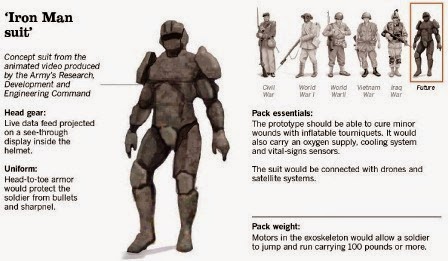
U.S. Special Operations Command is making progress researching, developing and testing a next-generation Iron Man-like suit designed to increase strength and protection and help keep valuable operators alive when they kick down doors and engage in combat, officials said.

The project, formally called Tactical Light Operator Suit, or TALOS, is aimed at providing special operators, such as Navy SEALs and Special Forces, with enhanced mobility and protection technologies, a Special Operations Command, or SOCOM, statement said.

"The ultimate purpose of the TALOS project is to produce a prototype in 2018. That prototype will then be evaluated for operational impact,” Lt. Cmdr. Matt Allen, SOCOM spokesman, told Scout Warrior.

Friday, May 27, 2016

US SOCOM to Test Laser Weapon Prototype Mounted on Apache Attack Helicopter

Special Operations Command will test a laser weapon on an Apache helicopter this summer, said one official May 26.

SOCOM's program executive office rotary wing is working alongside the Army’s project office for Apache Attack Helicopters to conduct a feasibility test this summer, said Col. John Vannoy, program manager for rotary wing.

“There is absolutely a niche I believe for use of directed energy weapons,” he said during a briefing at the annual Special Operations Forces Industry Conference sponsored by the National Defense Industrial Association. “The lens we are looking at this through right now is: ‘Is it feasible to do this?’ We’re not at the point where we’ve laid out a business case to advance it.”

The office envisions using a laser weapon to destroy vehicles or generators versus sending in a missile that could cost hundreds of thousands of dollars, he said.

Vannoy’s office and the Army's Apache office have entered into a cooperative research and development agreement with Raytheon to put a podded laser on the aircraft, he said.

“We really want to understand the environment on the wing, the beam quality we can get off the wing and the ability to beam steer and keep power on a target,” he said.

Environmental factors such as dust could affect beam quality. In addition, the vibrations on an Apache’s wing could affect steering, he said.

Vannoy did not disclose a specific timeframe for the test or when results would be made public. “Most of that will be internal quite frankly,” he said.

The effort is still in its infancy, he said. “I wouldn’t say that we’re at the tipping point and you’re going to see a Star Wars like effect or a Death Star laser hanging off the side of a rotary wing aircraft,” he said.

A directed energy weapon could also be mounted on an MH-60 Black Hawk, he said.

Thursday, April 07, 2016

Russia's Most Syrian Adventure Mini Update

As Syrian forces push their advantage against the Islamic State, it is increasingly clear that there are Russians on the ground with them. Some are Spetsnaz special forces, there for recon and forward air control, but others are mercenaries, working for a shadowy outfit in St. Petersburg. Increasingly, the Kremlin is waking up to the potential advantages of outsourcing combat missions to private contractors — but doing so in a very Russian way, in which “private” is still a euphemism for “deniable,” and where official intelligence agencies are still in control.

Much of the confusion about the scale and nature of Russia’s direct commitment on the ground probably reflects the presence of both state and private forces, with each having their own deniable components. Russian contractors appear to be operating T-90 tanks in combat and similar heavy equipment, and were at the fore of the recent drive to take Palmyra.

Sunday, April 03, 2016

US Considering Putting More Special Forces in Syria

The U.S. administration is considering a plan to greatly increase the number of American special operations forces deployed to Syria as it looks to accelerate recent gains against Islamic State, U.S. officials told Reuters.

The officials, with direct knowledge of the proposal's details, declined to disclose the exact increase under consideration. But one of them said it would leave the U.S. special operations contingent many times larger than the around 50 troops currently in Syria, where they operate largely as advisors away from the front lines.

The proposal is among the military options being prepared for President Barack Obama, who is also weighing an increase in the number of American troops in Iraq. A White House spokeswoman declined comment.

Friday, December 04, 2015

Special Forces Want Laser, Drone Armed AC-130 Gunship by 2020

Lt. Gen. Brad Heithold, the head of Air Force Special Operations Command, wants to make the AC-130 a kind of flying aircraft carrier, launching mini-drones mid-flight to scope out threats and targets. Oh, and he wants the AC-130 to have a laser cannon as well.

Speaking to the Association of Old Crows’ annual conference on electronic warfare, Heithold didn’t spend much time talking about EW. Yes, the AC-130’s current defensive jamming and spoofing suite — comparable to that on the aging B-52 — will be upgraded on the future AC-130J model, but even that won’t be enough to protect the gunship against increasingly sophisticated future threats.

“It’s been very successful at this point in defending itself on the target,” Heithold said. “That is not going to be case going forward.”

Instead, Heithold argued, AFSOC needs new ways to make its low-and-slow gunships more survivable: “The key, I believe, is to pursue high energy laser capabilities.”

Heithold sees both lasers and drones as having both offensive and defensive applications. It was the defensive side he focused on this morning. By shooting down enemy surface-to-air missiles, for example, a laser-armed AC-130 could defend not just itself but other coalition aircraft.

After a year of talking with “every industry partner who’s ever even touched a laser…I know the technology has matured now,” Heithold said. “I believe we can put a high energy laser — offensive and defensive — on an AC-130 by the close of this decade.”

Friday, October 30, 2015

Russia's Most Syrian Adventure #23


Supposedly at Al Harra again.

Russia claims they have hit 1623 targets in the past month.  That would imply an average of 50 targets per day.  We know they surged to nearly 100 targets a few days ago, so I wonder if they are having a significant drop off.  It would also explain why they are changing from reporting on their daily attack rate they were before.

The Russians have stated anyone fighting in Syria needs Syrian government approval to use force there.

In a twist, the US is 'sending' special forces to fight along side the Kurds.  Less than 60, supposedly, but I've heard from sources there might already be operators on the ground and I have to wonder if this is Obama telling the Russians the Kurds are off limits to bombing because they might kill Americans.  I'm not sure Putin really cares, but...

The Americans conducted 12 air strikes in the last 24 hours.

There are supposed to be more talks coming up in Vienna.  I am sure they will make as much progress as before.

Tuesday, October 06, 2015

TALOS Powered Armor Project on Track for 2018, Already Iterated Several Prototypes

After an American commando died kicking in a door during a raid in Afghanistan, the top commander of U.S. Special Operations vowed to prevent similar tragedies.

Two years later, the U.S. military is closer than ever to putting Iron Man on the front lines -- or at least something that closely mirrors the superhero's tech-forward suit of armor.

Unlike Hollywood's, the suit won't give its operator the ability to fly, but the real-life body armor may have one leg up on the fictional version: The military's suit will be made of liquid armor that can solidify on command.

Fitted with the protective gear -- the Tactical Assault Light Operator Suit, or TALOS -- troops would be more lethal and better protected, particularly the vulnerable first soldier to breach a compound.

An amalgam of academics, defense industry types and Pentagon personnel are trying to fine-tune the battery-powered exoskeleton, which would reduce strain on the body, provide superior ballistic protection and in-helmet technologies to boost communications and visibility.

Friday, September 25, 2015

A Discussion of the Special Forces' TALOS Powered Armor Effort

If you’ve seen any of the Iron Man movies, you know it’s all about the suit.

Tony Stark, as played by Robert Downey, Jr., is the epitome of suave wit—but without his metal shell, he’s just another engineer who’s made good. Once he’s sealed himself into his Autonomous Prehensile Propulsion Suit, though, he has everything from self-repair capabilities to plasma-based propulsion, all guided with the assistance of an advanced A.I. As a vehicle, it might not be as big as one of Larry Ellison’s catamarans, but it’s a lot flashier and can blow things up.

The exoskeleton is a technology platform that, while young, is gaining traction in industrial, medical and military circles. For several years, the U.S. Special Operations Command has been working on a Tactical Assault Light Operator Suit, or “TALOS,” that would provide “provide [infantry with] comprehensive ballistic protection and peerless tactical capability,” in the words of Gen. Joseph Votel, SOCOM’s commander.


Friday, September 18, 2015

US Air Force Special Operations Wants Tube Launched, Expendable Drone for AC-130s Targeting

US Air Force Special Operations Command wants an expendable, tube-launched small unmanned aerial vehicle for its AC-130 “battleplane” for peering beneath cloud cover to direct gunfire and precision-guided munitions.

The special forces organisation, which employs a large fleet of manned gunships equipped with 30mm and 105mm cannons, is pursuing the so-called Tactical Off-board Sensor as a way of “taking the cover of weather away from the enemy”.

AFSOC commander Lt Gen Bradley Heithold says the tube-launched UAV could be dropped from the back of the Lockheed Martin C-130-based gunship and orbit below the clouds. The sensor gimbal is controlled remotely from the AC-130, allowing crews to feed imagery and target coordinates into the on-board fire control system.


May I suggest a hardened Locust drone.   That's to go with the laser they want.  If they are putting lasers and drones on the 130, I wonder what the LRS-B is going to have.

Wednesday, September 16, 2015

Air Force Special Operations Command Wants 120 kw Laser for AC-130s by 2020

The head of Air Force Special Operations Command said he wants to to put a laser weapon on an AC-130J Ghostrider gunship by the end of the decade.

Lt. Gen. Bradley Heithold talked about the effort Tuesday during an interview with Military​.com at the Air and Space Conference near Washington, D.C. The event was organized by the Air Force Association.

“I’ve got the space and the weight and the power” to install a potentially 120-kilowatt laser weapon on the next-generation gunship, he said. “I can carve out the weight” required, which is about 5,000 pounds, he said. “I’ve got enough fuel. Now we got to put in a beam director and I think the industry — if we get the right teammates together — can put that capability on an AC-130.”

The Pentagon has long been interested in developing directed-energy weapons. The Navy last year tested a 20-kilowatt laser aboard the amphibious transport ship USS Ponce.

The Air Force and the Pentagon’s research arm this summer began ground testing a 150-kilowatt-class electric laser built by General Atomics against rockets, mortars, vehicles and surrogate surface-to-air missiles at White Sands Missile Range in New Mexico. The project, known as the Demonstrator Laser Weapon System, or DLWS, is based on Darpa’s High Energy Liquid Laser Area Defense System, or Hellads.

[...]

AFSOC wants to first use a laser to defend the AC-130 from surface-to-air missiles, then for offensive roles, the general said.

“So first concept is defending the aircraft using high-energy laser capability against missiles,” he said. “The second is now to be able to use that high-energy laser in an offensive role against hardened targets. So the challenge is to have that capability by the close of the decade, by 2020, and I think we can do that.”

Monday, May 11, 2015

India Wants to buy 4 V-22s for Special Forces

India's Aviation Research Centre (ARC), responsible for electronic surveillance and signals intelligence along the country's borders with Pakistan and China, wants to acquire Bell-Boeing V-22 Osprey tilt-rotor aircraft to augment its operational capabilities.

Bell-Boeing has recently provided the ARC with price estimates and delivery schedules for four Ospreys acquired via the US Foreign Military Sales (FMS) route, official and industrial sources have told IHS Jane's .

The four aircraft would cost around USD500-600 million, industry sources have said.

The ARC, which operates alongside India's external intelligence-gathering agency, the Research and Analysis Wing (RAW), aims to use the Ospreys to deploy Special Frontier Force (SFF) personnel and provide them logistic support on 'sensitive missions'.

Monday, February 02, 2015

Air Force Special Operations Command Wants a Laser for the AC-130


Air Force Special Operations Command’s top officer said he wanted to explore the possibility of adding a laser or directed energy weapon to the AC-130J Ghostrider.

Air Force Lt. Gen. Bradley Heithold, head of AFSOC, told a crowd at NDIA’s SO/LIC conference in Washington D.C. on Tuesday that he thought the technology was mature enough to install a laser weapon onto the AC-130J gunship.

The Air Force has already decided it will mount a 105mm cannon onto the newest variant of the gunship after the Air Force chose to limit the W-model to smart bombs and the 30mm cannon. Heithold explained that the 105mm cannon was needed because it was more accurate and cheaper than firing the Small Diameter Bombs.

The Pentagon has continued to expand its research into direct energy weapons, especially the Navy. Top Navy officials have remain committed to incorporating lasers onto Navy warships.


Wednesday, January 28, 2015

Special Forces Defend TALOS Powered Armor Project


A Pentagon plan to build a real-life "Iron Man" suit has taken some lumps from fiscal hawks on Capitol Hill, but US Special Operations Command's acquisitions chief defended it Wednesday as a way to protect troops using cutting-edge technologies.

In October, the final "wastebook" from Sen. Tom Coburn, R-Okla., listed the Tactical Assault Light Operator Suit (TALOS) program among 100 federal programs he called wasteful. The report knocked TALOS' estimated $80 million budget as a fraction of the projected cost to produce a prototype.

TALOS, although intended as an exoskeleton that allows the wearer to tote heavy gear and an internal computing system, is also an effort to develop a new framework for inventing technologies and fielding them quickly, SOCOM acquisition executive James Geurts said at an industry conference here.

"TALOS to me isn't the Iron Man suit as it is protecting the guy or gal at his most vulnerable point, to give them the capabilities and protection they need to get their mission done," Geurts said. "Just doing an incremental approach to that isn't going to get us where we need to get to. Our collective challenge is to come up with new operating models that make sense."

SOCOM's director of science and technology, Anthony Davis, acknowledged the skeptical press surrounding the program, but said the program's goals are more modest than the "Iron Man" nickname suggests.

"That program is not about putting a nuclear cell on someone's chest and having them fly off to battle," Davis said at the conference. "It's about protecting the operator. The first guy going through the door is our most vulnerable operator."

Tuesday, December 30, 2014

Waiting for TALOS: Skepticism Expressed Over Functioning Powered Armor for Special Forces


It’s one of those recurring stories about military technology. The Pentagon is working on an armored combat suit loaded up to the elbows in sensors and communications gear. Any day now, American troops will leap into battle like Iron Man and War Machine.

There’s several projects underway in different branches and defense contractors. The military is working with Harvard University to develop a web-patterned exosuit worn under a soldier’s uniform. The Navy has an exoskeleton project which hopes to augment dockworkers’ physical strength. Lockheed Martin has its own powered exoskeleton project for infantry troops, known as HULC.

Special Operations Command’s plan is for an armored suit known as TALOS. It blew up into a viral sensation earlier in July 2014 after The Wall Street Journal reported SOCOM had teamed up with a Hollywood special effects company to design conceptual models for the armor.

But it’s likely going to remain just a concept for years.

On Dec. 18, SOCOM released a broad agency announcement to contractors with lots of interesting details about it wants in TALOS. There’s little in the details that’s absolutely required, but SOCOM considers everything from bio-mechanical sensors to robotic medical devices as highly desirable.

Wednesday, December 24, 2014

General Dynamics Awarded Contract for ~$500 Million Mobile Landing Platform-class ship


General Dynamics NASSCO has been awarded a $498 million contract to build the fourth Mobile Landing Platform that will be the second configured as a so-called Afloat Forward Staging Base for mine countermeasure (MCM) helicopters and special operations forces (SOF) and U.S. Marines, the company announced on Monday.

The ship — based on the hull of an Alaska-class crude oil tanker — will be built at NASSCO’s San Diego, Calif. shipyard and will be completed by 2018, according to a Friday Department of Defense contract announcement.

“Under this option, NASSCO will provide the detail design and construction efforts to build the second AFSB of the Mobile Landing Platform-class ships,” read a statement from NASSCO.

The contract modification that funds the construction follows the first AFSB — USNS Lewis B. Puller (MLP-3/AFSB-1) — which was launched at the San Diego yard in November.

The 764-foot ship will field large helicopter deck capable of fielding MH-53E Sea Dragon MCM helos and provide accommodations for up to 250.

Monday, September 15, 2014

Gen Heithold: I Want a Directed Energy Weapon for Special Forces in 2017 Budget


The head of Air Force Special Operations Command says he is in the market for a directed energy beam weapon and plans to look at acquisitions possibilities as part of the 2017 defense budget.

Such a weapon could be used to knock out communications and power stations without the devastation and loss of life caused by bombs, rockets and missiles — something Air Force Lt. Gen. Bradley Heithold said was on the mind of many who lived through Operation Just Cause in Panama in 1989.

The operation to grab one-time U.S. ally and Panamanian strongman Manuel Noriega resulted in hundreds of civilian casualties.

“All we really had were kinetic rounds coming out of the airplane and really what you were trying to do was dismantle the Panamanian defense forces, wall them off and do the mission we had in hand,” said Heithold at a meeting with reporters Monday during the 2014 Air & Space Conference in Washington.

There are capabilities already being put to him, he said, but the timing and perhaps the technology still is not right.

“I’m a fan of looking at directed energy weapons, more of a fan of non-lethal directed energy weapons, so I’ve always kept [planning] space on my AC-130s for them,” he said. His 1998 paper suggested taking out the 20mm gun and replacing it with a directed energy weapon, but the technology at the time required a space the size of a small conference room.