Wednesday, February 11, 2009

SpaceX is Calling For Grass Roots Lobbying

SpaceX has made clear to anyone who would listen its interest in Capability D of NASA’s Commercial Orbital Transportation Services (COTS) program—usually simply called COTS-D—for crew transportation to and from the ISS. SpaceX has a COTS-D option in its existing Space Act Agreement with NASA, but that option is not funded. Now, as the House and Senate meet to reconcile their versions of the stimulus bill, SpaceX is making a public appeal for support for including COTS-D funding in the package.


More over at Space Politics.

What does that bode? That hasn't worked for space related issues in the past all that well.

Jared Diamond Couldn't Be More Wrong

Our surnames and genetic information are often strongly connected, according to a study funded by the Wellcome Trust. The research, published this week in the journal Molecular Biology and Evolution, may help genealogists create more accurate family trees even when records are missing. It also suggests that the often quoted "one in ten" figure for children born through infidelity is unlikely to be true.

Dr Turi King and Professor Mark Jobling from the University of Leicester examined the Y chromosomes of over 1,600 unrelated men with forty surnames (including variations in spelling). Sons inherit both the Y chromosome and – generally – the surname from their fathers, unlike daughters, who do not carry this sex-specific chromosome and usually change their surname through marriage.

Hereditary surnames were introduced to Britain by the Normans at the time of the conquest. The practice of using hereditary surnames filtered down from Norman noble families to all classes of society so that by the fourteenth century people in many classes had surnames and by the sixteenth century it was rare not to have one.

Dr King and Professor Jobling found that men with rare surnames – such as Grewcock, Wadsworth, Ketley and Ravenscroft – tended to share Y chromosomes that were very similar, suggesting a common ancestor within the past 700 years. However, men with common surnames, such as Smith, were no more likely to have such a common ancestor than men chosen at random from the general population.

"Surnames such as Smith come from a person's trade and would have been adopted many times by unrelated people," explains Dr King. "Less common names, such as Swindlehurst, were more geographically-specific and possibly adopted by only one or two men, so we would expect people with these surnames to be more closely related."

One of the most familiar of the rarer names in the study was Attenborough. A random sample of Attenboroughs – including derivations such as Attenborrow – found that almost nine out of ten of these men share the same Y chromosome type.

"Attenboroughs essentially form one big family of distant relatives," says Dr King. "The Y chromosome type was the same even across spelling variants, which confirms that the spellings of names were formalised only relatively recently."


Well, Gosh, Diamond...wrong? Nooooooo!

(not sarcasm tag)

Magnetic Cooling For Your Fridge

Your refrigerator’s humming, electricity-guzzling cooling system could soon be a lot smaller, quieter and more economical thanks to an exotic metal alloy discovered by an international collaboration working at the National Institute of Standards and Technology (NIST)’s Center for Neutron Research (NCNR).*

The alloy may prove to be a long-sought material that will permit magnetic cooling instead of the gas-compression systems used for home refrigeration and air conditioning. The magnetic cooling technique, though used for decades in science and industry, has yet to find application in the home because of technical and environmental hurdles—but the NIST collaboration may have overcome them.

Magnetic cooling relies on materials called magnetocalorics, which heat up when exposed to a powerful magnetic field. After they cool off by radiating this heat away, the magnetic field is removed, and their temperature drops again, this time dramatically. The effect can be used in a classic refrigeration cycle, and scientists have attained temperatures of nearly absolute zero this way. Two factors have kept magnetic cooling out of the consumer market: most magnetocalorics that function at close to room temperature require both the prohibitively expensive rare metal gadolinium and arsenic, a deadly toxin.

But conventional gas-compression refrigerators have their own drawbacks. They commonly use hydrofluorocarbons (HFCs), greenhouse gases that can contribute to climate change if they escape into the atmosphere. In addition, it is becoming increasingly difficult to improve traditional refrigeration. “The efficiency of the gas cycle has pretty much maxed out,” said Jeff Lynn of NCNR. “The idea is to replace that cycle with something else.”

The alloy the team has found—a mixture of manganese, iron, phosphorus and germanium—is not merely the first near-room-temperature magnetocaloric to contain neither gadolinium nor arsenic—rendering it both safer and cheaper—but also it has such strong magnetocaloric properties that a system based on it could rival gas compression in efficiency.


There's GOT to be more applications than jsut our fridges...hmmm. What about air conditioning? Or...

I wonder how much power this needs.

Tuesday, February 10, 2009

A C'mon!

I cannot believe what a whimpish sort you all are. I see EXACTLY who goes to my blog and EXACTLY who clicks what. You all can't help ONE student out with clicking on the below? There are three days left. Please do so. When I attempted to be a student, either I had time or I had money. I do not wish this curse on anyone else. Help Amanda out, ok? Click! Click for your lives!

Modeling Evolution

Emergence of species in evolutionary “simulated annealing”

1. Muyoung Heo,
2. Louis Kang and
3. Eugene I. Shakhnovich1

-Author Affiliations

1.
Department of Chemistry and Chemical Biology, Harvard University, 12 Oxford Street, Cambridge, MA 02138

1.

Edited by Harold A. Scheraga, Cornell University, Ithaca, NY, and approved November 20, 2008 (received for review October 1, 2008)

Abstract

Which factors govern the evolution of mutation rates and emergence of species? Here, we address this question by using a first principles model of life where population dynamics of asexual organisms is coupled to molecular properties and interactions of proteins encoded in their genomes. Simulating evolution of populations, we found that fitness increases in punctuated steps via epistatic events, leading to formation of stable and functionally interacting proteins. At low mutation rates, species form populations of organisms tightly localized in sequence space, whereas at higher mutation rates, species are lost without an apparent loss of fitness. However, when mutation rate was a selectable trait, the population initially maintained high mutation rate until a high fitness level was reached, after which organisms with low mutation rates are gradually selected, with the population eventually reaching mutation rates comparable with those of modern DNA-based organisms. This study shows that the fitness landscape of a biophysically realistic system is extremely complex, with huge number of local peaks rendering adaptation dynamics to be a glass-like process. On a more practical level, our results provide a rationale to experimental observations of the effect of mutation rate on fitness of populations of asexual organisms.


...just interesting.

Extinct Animal Subspecies Cloned

An extinct animal has been resurrected by cloning for the first time—though the clone died minutes after birth.

Findings revealed January 23 in the journal Theriogenology describe the use of frozen skin in 2003 to clone a bucardo, or Pyrenean ibex, a subspecies of Spanish ibex that went extinct in 2000.

Scientists had cloned endangered species before, but not one that had officially died out.

Study co-author Jose Folch, of the Center for Agro-Nutrition Research and Technology in Aragon, Spain, said his team plans to try cloning another this ibex this year or next.

"We are not especially disappointed for the death of the cloned newborn," Folch explained in an email, because such deaths in cloning experiments are common.

"We will try to improve the technology in order to increase the efficiency of the cloning process."

But David Wildt, a senior scientist at the Smithsonian's National Zoological Park in Washington, D.C., who did not participate in this study, warned that the successful cloning wouldn't be the first step in creating a real-life Jurassic Park.

"The public should not leap to the conclusion that we are on the edge of cloning woolly mammoths or dinosaurs," he said. "Even if such embryos could be constructed, there are no appropriate surrogate mothers for long-dead species."


Don't get too excited also for the single reason that this was an extinct subspecies rather than very different species. It's a huge leap to a radically different species. They had a lot of problems even so. I am surprised that they used goat eggs, really. Why not other ibex?

Greenland's Glacial Melt May Decelerate


Glaciology: From the front

Stephen Price1

1. Stephen Price is with the COSIM project, Fluid Dynamics and Solid Mechanics Group, Los Alamos National Laboratory, Los Alamos, New Mexico 87545, USA.
e-mail: sprice@lanl.gov

Abstract

The causes of recent dynamic thinning of Greenland's outlet glaciers have been debated. Realistic simulations suggest that changes at the marine fronts of these glaciers are to blame, implying that dynamic thinning will cease once the glaciers retreat to higher ground.
Introduction

For the past decade, many outlet glaciers in Greenland that terminate in the ocean have accelerated, thinned and retreated. To explain these dynamic changes, two hypotheses have been discussed. Atmospheric warming has increased surface melting and may have also increased the amount of meltwater reaching the glacier bed, increasing lubrication at the base and hence the rate of glacier sliding1. Alternatively, a change in the delicate balance of forces where the glacier fronts meet the ocean could trigger the changes2, 3, 4. On page 110 of this issue, Faezeh Nick and colleagues5 present ice-sheet modelling experiments that mimic the observations on Helheim glacier, East Greenland, indicating that the dynamic behaviour of outlet glaciers follows from perturbations at their marine fronts.

Greenland's ice sheet loses mass partly through surface melting and partly through fast-flowing outlet glaciers that connect the vast plateau of inland ice with the ocean. As the outlet glaciers flow into the sea, icebergs calve from their fronts. As highlighted in the fourth assessment report of the Intergovernmental Panel on Climate Change6, earlier ice-sheet models have failed to reproduce the dynamic variability shown by ice sheets over time. It has therefore not been possible to distinguish with confidence between basal lubrication from surface meltwater and changes at the glaciers' marine fronts as causes for the observed changes on Greenland's outlet glaciers.

The distinction bears directly on sea-level rise — the motivation for much of modern-day glaciology. If the recent dynamic mass loss from Greenland's outlet glaciers is linked to changing atmospheric temperatures, it may persist for as long as temperatures continue to increase. However, if the source of the dynamic mass loss is a perturbation at the ice–ocean boundary, these glaciers will lose contact with that perturbation after a finite amount of thinning and retreat. Therefore, the first hypothesis predicts continued retreat of outlet glaciers into the foreseeable future, whereas the second does not — provided the bedrock topography prohibits a connection between the retreating glacier and the ocean.

Nick and colleagues5 tested the physical mechanisms of each hypothesis in an innovative ice-flow model, and used that model to match a time series of observations from Helheim glacier, one of Greenland's three largest outlet glaciers (Fig. 1). They found that a reduction in resistance at the glacier front — which might result, for example, from the loss of a floating ice-tongue or a change in calving rate — triggers glacier behaviour in the model that is in broad agreement with observations7 from 2001–2006. Importantly, the model captures the observed pattern of a relatively minor initial acceleration, followed by more rapid acceleration and thinning as the glacier terminus retreats into deeper water across a bedrock low, and subsequent deceleration and stabilization as the glacier retreats into shallower water. In contrast, for experiments where basal lubrication was altered to simulate increased sliding from meltwater input, the modelled velocity and geometry show little similarity to the observations.

Along with many observations2, 3, 4, 7, 8, 9, 10, Nick and colleagues' simulations strongly support the contention that the recent retreat of Greenland's outlet glaciers is the result of changes at their marine fronts. Furthermore, the simulations confirm the earlier hypothesis7 that bedrock topography largely controlled Helheim glacier's rapid acceleration and retreat in 2004 and 2005, and its deceleration and stabilization in 2006. Finally, the current work indicates that, if requirements of observational data (high-resolution bedrock topography) and computational resources (fine computational grid resolution) can be met, improved predictive capability for ice-sheet models is attainable. With respect to the concerns raised by the Intergovernmental Panel on Climate Change, this study signals progress.


OTOH, Antarctica may continue to accelerate for a looong time.

Something That Has Been Desperately Needed

With this post, I'm launching a new, (very) occasional series I'm calling YANAL, for "You Are Not A Lawyer." In this series, I will try to disabuse computer scientists and other technically minded people of some commonly held misconceptions about the law (and the legal system).


EXCELLENT!

This has been needed for some time and with that nasty file system coder debacle this will help explain a thing or three to the idgit's online.

Last Glacial Maximum's Effect on Kelp Genetics

Kelp genes reveal effects of subantarctic sea ice during the Last Glacial Maximum

1. Ceridwen I. Fraser1,
2. Raisa Nikula,
3. Hamish G. Spencer and
4. Jonathan M. Waters

-Author Affiliations

1.
Allan Wilson Centre for Molecular Ecology and Evolution, Department of Zoology, University of Otago, 340 Great King Street, Dunedin 9016, New Zealand

1.

Edited by Gary R. Carvalho, University of Wales, Bangor, Great Britain, and accepted by the Editorial Board December 23, 2008 (received for review October 23, 2008)

Abstract

The end of the Last Glacial Maximum (LGM) dramatically reshaped temperate ecosystems, with many species moving poleward as temperatures rose and ice receded. Whereas reinvading terrestrial taxa tracked melting glaciers, marine biota recolonized ocean habitats freed by retreating sea ice. The extent of sea ice in the Southern Hemisphere during the LGM has, however, yet to be fully resolved, with most palaeogeographic studies suggesting only minimal or patchy ice cover in subantarctic waters. Here, through population genetic analyses of the widespread Southern Bull Kelp (Durvillaea antarctica), we present evidence for persistent ice scour affecting subantarctic islands during the LGM. Using mitochondrial and chloroplast genetic markers (COI; rbcL) to genetically characterize some 300 kelp samples from 45 Southern Ocean localities, we reveal a remarkable pattern of recent recolonization in the subantarctic. Specifically, in contrast to the marked phylogeographic structure observed across coastal New Zealand and Chile (10- to 100-km scales), subantarctic samples show striking genetic homogeneity over vast distances (10,000-km scales), with a single widespread haplotype observed for each marker. From these results, we suggest that sea ice expanded further and ice scour during the LGM impacted shallow-water subantarctic marine ecosystems more extensively than previously suggested.

First, since it's my drum to beat lately, repeat after me: the world is not in a stable state.

Secondly, this makes for interesting thoughts on the extent of the southern hemisphere's ice during that last LGM.

Tropical Salamander Implosion

Dramatic declines in neotropical salamander populations are an important part of the global amphibian crisis

1. Sean M. Rovitoa,
2. Gabriela Parra-Oleaa,b,
3. Carlos R. Vásquez-Almazánc,
4. Theodore J. Papenfussa and
5. David B. Wakea,1

-Author Affiliations

1.
aMuseum of Vertebrate Zoology and Department of Integrative Biology, University of California, Berkeley, CA 94720-3160;
2.
bInstituto de Biología, Universidad Nacional Autónoma de México, AP 70-153, Ciudad Universitaria, CP 04510 México DF, México; and
3.
cMuseo de Historia Natural, Universidad de San Carlos, Calle Mariscal Cruz 1-56, Zona 10, Cuidad de Guatemala, Guatemala

1.

Contributed by David B. Wake, December 20, 2008 (sent for review November 20, 2008)

Abstract

We document major declines of many species of salamanders at several sites in Central America and Mexico, with emphasis on the San Marcos region of Guatemala, one of the best studied and most diverse salamander communities in the Neotropics. Profound declines of several formerly abundant species, including 2 apparent extinctions, are revealed. Terrestrial microhabitat specialists at mid- to high elevations have declined more than microhabitat generalists. These terrestrial microhabitat specialists have largely disappeared from multiple sites in western Guatemala, including in well-protected areas, suggesting that the phenomenon cannot be explained solely by localized habitat destruction. Major declines in southern Mexican plethodontid salamanders occurred in the late 1970s to early 1980s, concurrent with or preceding many reported frog declines. The species in decline comprise several major evolutionary lineages of tropical salamanders, underscoring that significant portions of the phylogenetic diversity of Neotropical salamanders are at risk. Our results highlight the urgent need to document and understand Neotropical salamander declines as part of the larger effort to conserve global amphibian diversity.


I had hoped that the salamanders et al would not be declining the frogs have been, but that's obviously not the case. In a case of horrifying and hopefully very wrong linear extrapolation, could we be on the verge of
seeing that ancient lineage finally snuffed out? Depressing that thought is.

Cars I Want

Noel over at The Power and the Money went to a car show recently. He talked about the vehicles he wants or liked based on what he saw there. He then asked what cars we'd like. Well, garsh, since we're going to be in the market in the next six months for a vehicle replacement (originally planned to replace my jeep, but instead will be replacing the PT Cruiser).

In all probability we will end up buying a hybrid SUV of some kind. It'll depend on what we enjoy driving when we test drive. Feeling mildly patriotic, I'd lean towards a Ford Escape:


Our goal here is that it must move at least 5 people. It must get better than 30 mpg. We would prefer 4WD/AWD: while generally unnecessary in the Bay Area, who says we are going to stay here in the life time of this car for our family? In fact, there's a nontrivial probability that we will be moving.

If the tech was really ready, we'd be buying one of these intead:


(hydrogen fuel cell vehicle! Yummy!)

or

(that's a Jeep SUV hybrid...wait...it's called an EV, but its not really, it's also not really out for sale, alas)

There are two cars that I can in no way justify buying that I really, really want. They say that your first time and your first love are people that are forever imprinted on your soul: you never forget them and you are always remain to some degree in love with them. That would happen to be true for me about my first car. That was a 1978 Jeep CJ5 with the three speed, 4WD V8 304. That Jeep, the Beep as she was known, has forever marked herself in my soul. I have a 1992 Islander now with the straight 6, but she's not the same at all. If I could, I'd buy another Beep:


That's not my Beep, cuz I don't have a pic of her. Alas. However, you get the idea. It's not a family car though and that disqualifies it from being bought for a few years. Sad part is each year there are fewer and fewer of them: extinction's a unforgiving biatch. Maybe I ought to make an equivalent...lol. Lasers, supercomputers, rockets...cars? Interesting career path that.

Oh, that last car I can't justify? Well, if I were single I might squinted hard enough to buy it, but...

(I've loved small sports cars since my Dad had a Spyder when I was in high school)

Lyuda likes the idea of getting it too. That's her kind of car. lol. We'll need to save up a bit first though!

Ok, readers, what kind of car do you want?

More on the Devonian Anomalocarid


Chris Nedin, a pro paleo type that works on the Ediacaran and Cambrian fossils, has a very good post up on the Devonian Anomalocarid that was recently discussed. He has some issues with some of the reconstruction, but he did pronounce that, yes, indeed, this is ghost lineaged Anomalocarid!

Monday, February 09, 2009

C3 Planet Respiration Under Heightened CO2

The leaves of soybeans grown at the elevated carbon dioxide (CO2) levels predicted for the year 2050 respire more than those grown under current atmospheric conditions, researchers report, a finding that will help fine-tune climate models and could point to increased crop yields as CO2 levels rise.

The study, from researchers at the University of Illinois and the U.S. Dept. of Agriculture, appears this week in the Proceedings of the National Academy of Sciences.

Plants draw CO2 from the atmosphere and make sugars through the process of photosynthesis. But they also release some CO2 during respiration as they use the sugars to generate energy for self-maintenance and growth. How elevated CO2 affects plant respiration will therefore influence future food supplies and the extent to which plants can capture CO2 from the air and store it as carbon in their tissues.

While there is broad agreement that higher atmospheric CO2 levels stimulate photosynthesis in C3 plants, such as soybean, no such consensus exists on how rising CO2 levels will affect plant respiration.

There's been a great deal of controversy about how plant respiration responds to elevated CO2," said U. of I. plant biology professor Andrew Leakey, who led the study. "Some summary studies suggest it will go down by 18 percent, some suggest it won't change, and some suggest it will increase as much as 11 percent."

[...]

Rather than assessing plants grown in chambers in a greenhouse, as most studies have done, Leakey's team made use of the Soybean Free Air Concentration Enrichment (Soy FACE) facility at Illinois. This open-air research lab can expose a soybean field to a variety of atmospheric CO2 levels – without isolating the plants from other environmental influences, such as rainfall, sunlight and insects.

Some of the plants were exposed to atmospheric CO2 levels of 550 parts per million (ppm), the level predicted for the year 2050 if current trends continue. These were compared to plants grown at ambient CO2 levels (380 ppm).

The results were striking. At least 90 different genes coding the majority of enzymes in the cascade of chemical reactions that govern respiration were switched on (expressed) at higher levels in the soybeans grown at high CO2 levels. This explained how the plants were able to use the increased supply of sugars from stimulated photosynthesis under high CO2 conditions to produce energy, Leakey said. The rate of respiration increased 37 percent at the elevated CO2 levels.

The enhanced respiration is likely to support greater transport of sugars from leaves to other growing parts of the plant, including the seeds, Leakey said.


No time to comment. Also, I am not a botanist. :)

UPDATE: Paper here.

Trees Migrating North Due to Warming

Other than the Ents of Lord of the Rings fame, trees generally aren't known for their mobility. So news that some tree species may be headed north at an average clip of 62 miles (100 kilometers) a century may come as a surprise.

At that rate, stands of yellow birch in the U.S., for example, may move well north of the Canadian border by the early 2100s.

That's the finding of a new study led by the U.S. Forest Service, which concludes that a few dozen tree species in the eastern U.S. are moving north at an unexpected rate, likely due to global warming.

In a paper appearing this month in the journal Forest Ecology and Management, the study authors documented the northward march of 40 major tree species over 30 eastern states based on the distribution of seedlings versus mature trees.

Previous studies of plant migrations had been done using only computer simulations, or they focused on how some species are climbing up hills and mountains, said co-author Chris Oswalt, of the Forest Service's Southern Research Station in Knoxville, Tennessee.

By contrast, the new study looked at movement based on latitude, using a sampling of the forest service's most recent ground-based data.

The finding confirms a link between global warming and forest migration, said lead study author Chris Woodall, of the Forest Service's Northern Research Station in St. Paul, Minnesota.

"This is no longer conjecture," he said.


Umm. We kinda knew this. 10k years ago Canada was something of a waste land. The trees have been migrating north as a very brisk clip ever since the last glacial cycle ended. They were already moving north. The world was not is not and will not be in some sort of stable state, ecologically.

I need to get the paper, but it's probable that what they have done is tie the temperature changes at latitude to the flora. That would be a linkage that would be hard to ignore and "prove" that global warming was the causation. We'll see.

PZ Meyers Takes Nice Shots at the Kurzweil Stupi^H^H^H^H^HSingularity

Sweet!

Heat and Economics Death to the Singularity!

Wait.

Will this make the Singularians allies of the Fundie Bunch?!

AAAAAAAAAAAAAAAAARGGGGGGGGHHH!!!!!!!!!!!

Bivalve Fossil Census Hints Origination Rates Higher

Paleontologists can still hear the echo of the death knell that drove the dinosaurs and many other organisms to extinction following an asteroid collision at the end of the Cretaceous Period 65 million years ago.

"The evolutionary legacy of the end-Cretaceous extinction is very much with us. In fact, it can be seen in virtually every marine community, every lagoon, every continental shelf in the world," said University of Chicago paleontologist David Jablonski. It is, he said, "sort of an echo of the big bang for evolutionary biology."

This conclusion followed a detailed global analysis of marine bivalves, one of the few groups plentiful enough in the fossil record to allow such a study, which was funded by the National Aeronautics and Space Administration. Andrew Krug of the University of Chicago, Jablonski and James Valentine of the University of California, Berkeley, examined the geologic ages of every major lineage of living bivalves the world over, from oysters and scallops to quahogs and cockles. Their report appears in the Feb. 6 issue of the journal Science.

The team followed procedures similar to taking a census of everyone living in Chicago, inferring birth rates from that age profile, and then comparing them to a census for Tokyo, Mexico City and other major international metropolitan areas.

Their analysis quantified the time of origin for 711 lineages of bivalves living in the oceans today, and converted them to evolutionary origination rates. In all but the highest-latitude locations, the team saw the clear signs of a strong increase in origination rates following the end of the Cretaceous.

That was no great surprise, Jablonski said, because "the post-extinction recovery pulse is dramatic—we've known about it for a long time." The surprising finding was that the initial 10 million-year boom never really went bust. The origination rate slowed a bit, but did not drop back to the levels that preceded the mass extinction. "It was as if the post-war baby boom birth rate slowed slightly but never returned to pre-war levels," he said.

Why the origination rate failed to drop to previous levels remains an unsolved question, "one that we never even would have asked if we hadn't analyzed the data in this new way," Jablonski noted. "It could be that the extinction took out competitors that had been holding the bivalves back, and permanently opened more room to diversify. Or the post-extinction increase in predation by crabs, fish and other enemies may have spurred the bivalves to keep evolving at a faster pace." These will be interesting ideas to test next, according to Jablonski.


Huh. I wonder if that will hold up for vertebrates (if it does for bivalves). It could mean that we haven't yet hit stable state for our ecology even prior to the current Sixth Mass Extinction. It's an interesting thought.

Then...OMG, we're in the middle of the Late Ceno-Triassic Mass Extinction! AAAAAAAAAAAAAAAAH!!!!

More Russian State Failure Commentary

Because the economic system adopted under Vladimir Putin is no longer working, the political system the former president and current prime minister put in place is rapidly approaching its end, according to a leading Siberian political analyst. But what will replace it and equally how it will be replaced remain very open questions.

In a lengthy commentary posted on the Irkutsk portal Babr.ru, Dmitry Tayevsky argues that because Moscow is running out of money as a result of the declines in the price of oil and gas, the Russian political system is no longer in a position to sustain itself or act as it has both at home and abroad (babr.ru/?pt=news&event=v1&IDE=506710).

Barring a miracle – and Tayevsky says there won’t be one – Moscow will not be able to meet the commitments it has made to foreigners – including its efforts to purchase friends in the CIS – or to Russians – such as promises to increase pensions – and consequently, Russians won’t be able to continue to live at the level they thought was theirs after the troubled 1990s.

It is worth recalling, Tayevsky says, how “92 years ago, a much less serious situation led to some very serious consequences” and thus to think about what may happen as a result. He thus devotes the remainder of his article to a discussion of six possible “variants” of Russia’s future development.


This really does feel like the Russians have the End Times on Their Mind. Or something. Sheesh. Russian zeitgeist: WE'RE ALL GONNA DIE!? I flagged this Russo-meme before.

Or is this just another little brick on the planned road that Putin has in mind. My wife would vote for the latter, but the conspiracy theory is rooted deep, deep, deep in xUSSR culture and she may be overestimating Darth Putin.

Miocene Marine Ursoid? Huh?


First sloths. Now bears?! Doesn't Mother Nature have any sort of sense of decency?! She corrupts all these nice, beautiful, innocent terrestrials through evolution into filthy, marine critters.

Bad Mama Nature! Bad! No cookie!

Go read about this in a brief post on Dots in Deep Time written by our Suomic addition to the paleo blogosphere, Ville Sinkkonen (welcome!).

Yet More SGI Trouble


If there is one company out there that embodies "former glory", it just has to be Silicon Graphics Incorporated. Once one of the most well-respected high-performance computer and software makers of the world, it is now a mere shadow of its former self. The most recent set of financial results from the company do not bode well for the already troubled company.

SGI made most of its name back when it was the primary supplier of graphics hardware for the Hollywood visual effects industry. The company supplied this demanding industry with heavy duty graphics workstations, as well as high-performance visualisation systems. SGI's penetration in this market became clear when the brand started to appear in high-profile movies, with the most memorable being the "This is a UNIX system, I know this." case of Jurassic Park.

However, with the rise of powerful graphics hardware in cheap, ordinary computers, as well as the emergence of Linux and the advent of the Windows/Linux/Mac OS X port of Maya, led to the company slowly being pushed out of the visual effects industry, being replaced by the aforementioned cheaper options. Instead, the company focussed on government work, the scientific market and high-end servers and supercomputers.

There were several other confounding factors that have helped in SGI's decline. The company prematurely announced a switch from MIPS to Itanium in 1998, after which it quickly became clear that Intel could not deliver the Itanium on time; to make matters worse, Itanium would not reach the speeds as promised by Intel. This left SGI with a set of outdated MIPS-based products, and they quickly had to release new models with faster processors to remain competitive. The switch to Itanium was continued later on, and at one point, the SGI Altix formed the base of the Columbia supercomputer, which was built out of 20 Altix 3000 systems with 512 Itanium processors each. At the time, this was by far the faster supercomputer in the world.

In 2006 the company announced the end of its legendary MIPS product line, as well as the end of the IRIX operating system, preferring Linux instead, all as part of a plan to bring the company back to positive figures. Not long after, the company emerged from bankruptcy, and things started to look up again. The company even re-entered the famed visualisation market with the SGI Virtu running Linux or Windows Compute Cluster.

However, due to the economic downturn, the company has made a few steps back during the last quarter. I won't bore you with the figures, but suffice to say it's not going well. The company is hoping to get government support, rooting for a slice of the stimulus pie president Obama and the US Congress are working on right now.


If they need some of the stimulus package to survive, they're probably toast. Then again, we've been saying that for a loooooooooooooooong time. From our POV, they're the undead HPC maker.

They. Just. Won't. Die.

OTOH, some of the things they have on their HPC roadmap - if they can survive that long - are damned fascinating if they can pull them off.

Friday, February 06, 2009

HELSTF Laying Off More

lmost a year after 30 contract employees were laid off at the High Energy Laser System Test Facility, more layoffs were confirmed Wednesday by White Sands Missile Range officials.

However, details regarding the number of affected employees and when those dismissals will begin were not immediately known. Monte Marlin, WSMR spokeswoman, said she was aware of the layoffs but details would have to come from the U.S. Space and Missile Defense Command, the supervising agency for HELSTF.

"HELSTF has long been a part of the White Sands Missile Range family and we support them as we all have to go through this," Marlin said.

Strategic Missile Defense Command officials could not be reached for comment.

The agency's spokesman was attending a professional seminar Tuesday and Wednesday and was not expected back in his Huntsville, Ala. office until today. Additional calls to the agency were not returned.

Representatives for Sen. Jeff Bingaman, D-N.M., were not immediately aware of the layoffs and were also trying to obtain more information Wednesday.


Alas. It was fun while I worked there, but, truthfully, chemical lasers are not the future of DEWs, soooo...how long until they close the facility since Saint Pete has retired?

Thursday, February 05, 2009

Sea Level Rise in Northern Hemisphere Could Be Even Worse

If global warming some day causes the West Antarctic Ice Sheet to collapse, as many experts believe it could, the resulting sea level rise in much of the United States and other parts of the world would be significantly higher than is currently projected, a new study concludes.

The catastrophic increase in sea level, already projected to average between 16 and 17 feet around the world, would be almost 21 feet in such places as Washington, D.C., scientists say, putting it largely underwater. Many coastal areas would be devastated. Much of Southern Florida would disappear.

The report will be published Friday in the journal Science, by researchers from Oregon State University and the University of Toronto. The research was funded by the National Science Foundation and other agencies from the U.S. and Canada.

"We aren't suggesting that a collapse of the West Antarctic Ice Sheet is imminent," said Peter Clark, a professor of geosciences at Oregon State University. "But these findings do suggest that if you are planning for sea level rise, you had better plan a little higher."

The Intergovernmental Panel on Climate Change has estimated that a collapse of this ice sheet would raise sea levels around the world by about 16.5 feet, on average, and that figure is still widely used. However, that theoretical average does not consider several key forces, such as gravity, changes in the Earth's rotation or a rebound of the land on which the massive glacier now rests, scientists say in the new study.

Right now, this ice sheet has a huge mass, towering more than 6,000 feet above sea level over a large section of Antarctica. This mass is sufficient to exert a substantial gravitational attraction, researchers say, pulling water toward it – much as the gravitational forces of the sun and moon cause the constant movement of water on Earth commonly known as tides.

"A study was done more than 30 years ago pointing out this gravitational effect, but for some reason it became virtually ignored," Clark said. "People forgot about it when developing their sea level projections for the future."

And aside from incorporating the gravitational effect, the new study adds further wrinkles to the calculation – the weight of the ice forcing down the land mass on which it sits, and also affecting the orientation of the Earth's spin. When the ice is removed, it appears the underlying land would rebound, and the Earth's axis of rotation defined by the North and South Pole would actually shift about one-third of a mile, also affecting the sea level at various points.

When these forces are all taken into calculation, the sea level anywhere near Antarctica would actually fall, the report concludes, while many other areas, mostly in the Northern Hemisphere, would go up.

If the West Antarctic Ice Sheet completely melted, the East Coast of North America would experience sea levels more than four feet higher than had been previously predicted – almost 21 feet - and the West Coast, as well as Miami, Fla., would be about a foot higher than that. Most of Europe would have seas about 18 feet higher.


No commentary beyond the locals have been saying 9m for a while now...

Los Alamos' rumored toilet flushing has depressed the crap out of me.

Hmmm: Svenson on Permian Extinction

An ancient killer is hiding in the remote forests of Siberia. Walled off from western eyes during the Soviet era and forgotten among the endless expanse of wilderness, scientists are starting to uncover the remnants of a supervolcano that rained Hell on Earth 250 million years ago and killed 90 percent of all life.

Researchers have known about the volcano -- the Siberian Traps, for years. And they've speculated that the volcanic rocks, which cover an area about the size of Alaska, played a role in runaway global warming that led to the end -- Permian mass extinction, the worst dying the planet has ever seen.

Now a team of researchers led by Henrik Svenson of the University of Oslo in Norway have performed a series of experiments, showing the volcano employed an arsenal of deadly weapons during its 200,000-year-long assault on the biosphere.

Prime among them was carbon. Searing magmas from the volcano intruded into the Tunguska Basin in eastern Siberia, a region laden with thick deposits of coal, oil and gas. Heat from the molten rock baked the hydrocarbons, turning the area into the world's largest fossil fuel-burning plant. In all, the volcano may have belched as much as 100,000 gigatons of carbon into the air (all of humanity emits about eight gigatons of carbon annually).

That's more than enough to cause a global climate apocalypse. But the team also wanted to know what happened when lava infiltrated the area's abundant salt deposits. When heated in a laboratory to 275 degrees Centigrade (527 degrees Fahrenheit), the salts released a host of toxic gases, chief among them methyl chloride, an efficient ozone-killer.

"This is the first geologically realistic evidence that ozone collapse during the end-Permian could have actually happened," Svenson said.


Does anyone have either contact info or the paper that this above article is referencing? I tried looking around on the Unviersity of Oslo website, but can't seem to find Dr Svenson...All I can find is the Discovery article and blog links back to it.

Schinderhannes bartelsi, a Penguin-winged Anomalocarid?


A missing link in the evolution of the front claw of living scorpions and horseshoe crabs was identified with the discovery of a 390 million-year-old fossil by researchers at Yale and the University of Bonn, Germany.

The specimen, named Schinderhannes bartelsi, was found fossilized in slate from a quarry near Bundenbach in Germany, a site that yields spectacularly durable pyrite-preserved fossils — findings collectively known as the Hunsrück Slate. The Hunsrück Slate has previously produced some of the most valuable clues to understanding the evolution of arthropods – including early shrimp-like forms, a scorpion and sea spiders as well as the ancient arthropods trilobites.

"With a head like the giant Cambrian aquatic predator Anomalocaris and a body like a modern arthropod, the specimen is the only known example of this unusual creature," said Derek Briggs, director of Yale's Peabody Museum of Natural History and an author of the paper appearing in the journal Science.

Scientists have puzzled over the origins of the paired grasping appendages found on the heads of scorpions and horseshoe crabs. The researchers suggest that Schinderhannes gives a hint. Their appendages may be an equivalent to those found in the ancient predatory ancestor, Anomalocaris — even though creatures with those head structures were thought to have become extinct by the middle of the Cambrian Period, 100 million years before Schinderhannes lived.

The fossil's head section has large bulbous eyes, a circular mouth opening and a pair of segmented, opposable appendages with spines projecting inward along their length. The trunk section is made up of 12 segments, each with small appendages, and a long tail spine. Between the head and trunk, there is a pair of large triangular wing-like limbs — that likely propelled the creature like a swimming penguin, according to Briggs. Unlike its ancestors from the Cambrian period, which reached three feet in length, Schinderhannes is only about 4 inches long.


So the Anomalocarid line didn't die out in the Cambrian. ha! This sucker is Devonian! Knock down a family from getting wiped out in the Cambrian Extinction.

This Is A *REALLY* Bad Idea


It has been reported in several places that the Obama administration is considering transfering LANL and LLNL from the Department of Energy to the Department of Defense.

...

I cannot explain how bad of an idea this is.

The Bush administration's stupidity wrt the management changes (UC to contractors) was bad enough. It axed hundreds of researcher jobs at LANL and LLNL. Now if the Labs are transfered to the Pentagon, the science there is simply dead. The purpose of the labs would simply be weapons production and research only. Los Alamos would devolve into a nuke production/research facility and really, at that point, why have LLNL and LANL...

...

I cannot even express how depressed this makes me.

Guess Obama really is putting science back in its proper place.

Oh and Chu! How could you?!

Note: This is posted on my time. No opinions here are LBNL's or NERSC's. However, as Chu knows from many an all hands, keeping an LBLer from calling people on the carpet is nigh on impossible.

Climate Change's Greatest Impact on Fishing Nations

With climate change threatening to destroy coral reefs, push salt water into freshwater habitats and produce more coastal storms, millions of struggling people in fishery-dependent nations of Africa, Asia and South America could face unprecedented hardship, according to a new study published today in the February issue of the peer-reviewed journal Fish and Fisheries. The study, by a team of scientists at the WorldFish Center, the University of East Anglia, Simon Fraser University, the Centre for Environment, Fisheries and Aquaculture Science, the University of Bremen, and the Mekong River Commission, is the first to identify individual nations that are "highly vulnerable" to the impact of climate change on fisheries.

The authors of the report examined 132 national economies to determine which are the most vulnerable, based on environmental, fisheries, dietary and economic factors. Countries that need the most attention, they said, are not necessarily the places that will experience the greatest environmental impacts on their fisheries. Rather, they are countries where fish play a large role in diet, income and trade yet there is a lack of capacity to adapt to problems caused by climate change—such as loss of coral reef habitats to the bleaching effects of warmer waters and lakes parched by an increase in heat and a decrease in precipitation. For example, fish accounts for 27 percent or more of daily protein intake in vulnerable countries—compared to 13 percent in non-vulnerable nations—and there are scant resources for alternative sources of protein.

Both coastal and landlocked countries in Africa, including Malawi, Guinea, Senegal and Uganda, four Asian tropical countries—Bangladesh, Cambodia, Pakistan and Yemen—and two countries in South America, Peru and Colombia, were identified as the most economically vulnerable to the effects of global warming on fisheries. Overall, of the 33 countries that were considered highly vulnerable, 19 are already classified by the United Nations as "least developed" due to their particularly poor socioeconomic conditions.


Something for the economists that read this to consider.

Also, Noel, that Titanoboa fossil I linked to the story for has implications for the previous post on Huber's hypothesis on tropical plant growth getting trashed during an Eocene-esque warming event would be questionable: Titanoboa was not a desert critter and required the temperature average to be around 5 C + more than now in that region to get the growth observed.

Wednesday, February 04, 2009

3k Clicks to Catch Up

Amanda's trying for that scholarship still and she has 3k clicks to catchup to the lead. So c'mon, folks. Just a few more!

Chemical Traces Hint Sponges Predate Snowball Earth

Chemical traces left in 635 million-year-old rocks in Oman provide the earliest evidence so far of animal life, researchers said Wednesday.

[...]

"There is a great wealth of evidence these sponges were the first multi-cellular organisms to exist."

Using a chemical analysis of molecules in rocks dated to 635 million years ago, the researchers discovered a modified form of cholesterol only produced by the sponges.

This suggests the creatures existed before a monstrous ice age that occurred around 630 million years ago, an interesting finding because many scientists believe the frozen periods spurred the development of complex forms of life, Summons said.

These simple forms of animal life came about 200 million years before land plants appeared on Earth, Summons added. The first single cell bacteria and other similar forms of life appeared around two-and-a-half billion years ago.

The oldest visible fossils of animals found in rocks are 580 million years old but the findings from this paper published in the journal Nature show that looking at molecular evidence is also key to better understanding evolution, he said.


hmmm. This one needs to have the paper before I'll say more than hmm. (wish eureka alert ad had this one up first)

LLNL's Sequoia Planned as 20 PetaFlops

Roadrunner and Jaguar, the DOE supercomputers that launched the petaflop era last year, will soon be eclipsed by new machines more than ten times as powerful. IBM and the US National Nuclear Security Administration (NNSA) announced on Tuesday that in 2011 Lawrence Livermore National Laboratory will install a 20 petaflop system to provide computational support for the country's aging nuclear weapons.

Building on its Blue Gene heritage, IBM will deliver "Dawn," a 500 teraflop Blue Gene/P system in the first quarter of this year, followed by "Sequoia," a 20 petaflop next-generation Blue Gene/Q machine for 2011. Sequoia is expected to officially go online in 2012. The new machines will take over Lawrence Livermore's weapon simulation codes that are being maintained under the Advanced Simulation and Computing (ASC) Program. Currently this work is being done with the existing capability supercomputers at the lab: the 100 teraflop ASC Purple and the 600 teraflop Blue Gene/L.

Dawn will act as an interim platform for porting and scaling the weapons codes. Once the Blue Gene/Q super comes online, those codes will be moved over to the bigger machine for production. The Dawn machine is in the process of being built right now, with about half of the machine already wired together at Lawrence Livermore. The lab is planning on getting the rest of the hardware over the next few months, with system acceptance scheduled for April.

[...]

Not only will Sequoia be more than ten times as powerful as the current crop of petaflop supercomputers, its energy efficiency will be much improved. According to IBM Deep Computing VP Dave Turek, Sequoia will consume around 6 megawatts, yielding an energy efficiency ratio of 3,000 FLOPS/watt. That represents a 7X improvement over the Blue Gene/P generation (440 FLOPS/watt), and is even better than the Cell-based Roadrunner system at Los Alamos (587 FLOPS/watt). For a starker comparison, the 1.6 petaflop Opteron-based Jaguar supercomputer installed at Oak Ridge National Laboratory uses about 8.5 megawatts (188 FLOPS/watt).

[...]

IBM is not releasing low-level details of the Blue Gene/Q architecture. However, since Sequoia will be composed of 98,304 compute nodes and contain a total of 1.6 million cores, one can surmise that a Blue Gene/Q node will contain 16 cores. Whether this is implemented as one 16-core chip or two 8-core chips (or even four quad-core chips) remains to be seen. Since Sequoia will sport 1.6 petabytes of memory, each node stands to have 16 GB. The current Blue Gene/P technology offers 4 cores and 4 GB of main memory per node.


1.6 million cores. I don't want to sound like a poo-poo-er, but... 1.6 MILLION CORES. There are exceedingly few algorithms or problem sets that will scale to that level. Climate. Some explosions. There are great deal of users here that are on the verge of being shuffled off to non HPC assets. If Sequoia is the wave of the future, these guys are toast. There's no way to gang together their moderately parallel apps into ones that will work on something that scale.

Some scattered notes and thoughts: per core memory is 1 GB (note: if you have more than 2 you are idling your CPU big time, folks). 400k processors means there will be thousands of them failing at a time: with the so-called 5 9s of reliability (99.999%) there will be 4 CPUs down at any given time. More likely, with a 97%, then 20k CPUs will be down and out. Flops per core doesn't seem to have improved much (no surprise). Power per core is improved though.

In the era of Sequoia, assuming it works, even Franklin (our Cray) will no longer be an HPC asset really. Supercomputer status is a moving target. Keep up or end up someone's desktop.

NIF Complete, Ready to Begin Ramp Up

The US National Ignition Facility (NIF) in Livermore, California, is almost ready to fire up its 192 laser beams to recreate the Sun's fusion burn.

The last of the project's 6,206 optics units ? the mostly glass and crystal components that focus the lasers onto a tiny target ? was installed on 26 January. It marked the end of the US$3.5-billion facility's construction ahead of a federal deadline of 31 March.

After years of delay and hundreds of millions of dollars in overrun costs, "the project is, for all intents and purposes, completed", says NIF director Edward Moses. He will now focus on ramping up the 'shots' of laser light. On hitting the target, the shots create temperatures of more than 100 million degrees and pressures that are thousands of times greater than at Earth's core, which scientists hope will trigger nuclear fusion. Although smaller lasers have achieved petawatt (1015 W) powers in femtosecond (10?15 s) bursts, NIF's total energy will exceed that of any current facility. Its goal is to reach 1.8 million joules, far greater than the 40,000 joules generated by the current leader: OMEGA at the University of Rochester, New York. It is likely to remain at the top until a similar facility, the Laser Mégajoule near Bordeaux, France, is completed in 2010.


Note: this would be a great grand pappy of a fusion drive. ;)

The Counter Younger Dryas Impact Paper

Wildfire responses to abrupt climate change in North America

1. J. R. Marlona,1,
2. P. J. Bartleina,
3. M. K. Walsha,
4. S. P. Harrisonb,
5. K. J. Brownc,d,
6. M. E. Edwardse,f,
7. P. E. Higuerag,
8. M. J. Powerh,
9. R. S. Andersoni,
10. C. Brilesg,
11. A. Brunelleh,
12. C. Carcailletj,
13. M. Danielsk,
14. F. S. Hul,
15. M. Lavoiem,
16. C. Longn,
17. T. Minckleyo,
18. P. J. H. Richardp,
19. A. C. Scottq,
20. D. S. Shaferr,
21. W. Tinners,
22. C. E. Umbanhowar, Jr.t and
23. C. Whitlockg

Abstract

It is widely accepted, based on data from the last few decades and on model simulations, that anthropogenic climate change will cause increased fire activity. However, less attention has been paid to the relationship between abrupt climate changes and heightened fire activity in the paleorecord. We use 35 charcoal and pollen records to assess how fire regimes in North America changed during the last glacial–interglacial transition (15 to 10 ka), a time of large and rapid climate changes. We also test the hypothesis that a comet impact initiated continental-scale wildfires at 12.9 ka; the data do not support this idea, nor are continent-wide fires indicated at any time during deglaciation. There are, however, clear links between large climate changes and fire activity. Biomass burning gradually increased from the glacial period to the beginning of the Younger Dryas. Although there are changes in biomass burning during the Younger Dryas, there is no systematic trend. There is a further increase in biomass burning after the Younger Dryas. Intervals of rapid climate change at 13.9, 13.2, and 11.7 ka are marked by large increases in fire activity. The timing of changes in fire is not coincident with changes in human population density or the timing of the extinction of the megafauna. Although these factors could have contributed to fire-regime changes at individual sites or at specific times, the charcoal data indicate an important role for climate, and particularly rapid climate change, in determining broad-scale levels of fire activity.


Link above.

UC Berkeley Energy Symposium

Raytheon's Laser Centurion


50 kw, solid state, almost assuredly pulsed and its tied to the same radars and such that the Phalanx point defense system uses. This has a lot more short term promise than the Laser Avenger. The LA was only a one kilowatt laser (now 2): that makes burn through time on anything more than balsa wood or cheap plastic take far too long.

That pointer-tracker looks smaller than THEL's to me, but I could be sizing that up poorly.

I wonder if this is at HELSTF or not.

Oh, note, some of the countermeasures that are present on the THEL wikipedia page don't work: they have been testing some of them (such as reflective coatings AND rotating bodies) for over two decades. The HELs win every time. Huh, who'd over thunk it. Wikipedia has something wrong. Ah well.

Now THAT'S a SNAKE!


Excavations in Colombia co-organized by Carlos Jaramillo, staff scientist at the Smithsonian Tropical Research Institute in Panama and Jonathan Bloch, curator of vertebrate paleontology at the University of Florida's Florida Museum of Natural History, unearthed fossil remains of a new snake species named Titanoboa cerrejonensis.

Surrounded by huge trucks extracting coal from Cerrejon, one of the world's largest open-pit mines, researchers discovered fossilized bones of super-sized snakes and their prey, crocodiles and turtles, in the Cerrejon Formation, along with fossilized plant material from the oldest known rainforest in the Americas, which flourished at the site 58-60 million years ago.

Jason Head, the lead author of the new species description in the journal Nature, is a research associate at the Smithsonian's National Museum of Natural History and assistant professor of ecology and evolutionary biology at the University of Toronto Mississauga. Head, with David Polly, associate professor of geosciences at Indiana University, used the ratio between vertebral size and the length of existing snakes to estimate that this boa-like snake must have reached 13 meters (42 feet) in length and weighed more than a ton. Titanoboa, as it is now called, is the largest snake ever known, and was the largest non-marine vertebrate from the epoch immediately following the extinction of dinosaurs 65 million years ago.


What in the world was a snake THAT large eating in the paleocene of SoAm?

A WAAAAY Better Choco Canyon


And the mascot is "cocoapelli".

I laughed so damned hard I was really glad I didn't have anything to drink when I read that.

microecos is the source of the above. I made the pun and Neil ran with it. REALLY ran with it. My readers HAD to see this.

Tuesday, February 03, 2009

Oh My Political Views!

This is absurd, but funny.

My Political Views
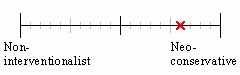
I am a centrist moderate social authoritarian
Right: 0.62, Authoritarian: 1.48


(side effect of being a parent now? lol)

My Foreign Policy Views
Score: 6.04

Political Spectrum Quiz


(pardon me while I wipe away the foam at the mouth)

My Culture War Stance
Score: -0.7

Political Spectrum Quiz

(I'm mildly lefty?! OH NOOOOOOOOOOO!!!! (not serious for the humor impaired)

Anasazi Choco Canyon


Chemical residues found on pottery jar shards reveal that the practice of drinking chocolate had spread at least as far north as Chaco Canyon (map) in northern New Mexico by A.D. 1000 to 1125—400 years earlier than chocolate was thought to have reached what is now the United States.

The discovery suggests a vast trade network helped deliver chocolate from Central America, where the seeds of the cacao tree were first transformed into beverages some 3,000 years ago.

"That's a long way to go for something that you don't need for survival, [something] that's more of a delicacy," said Patricia Crown, an anthropologist at the University of New Mexico and co-author of the new study, which appears in tomorrow's issue of the journal Proceedings of the National Academies of Science.
Anyone writing alternate history along the lines of Doug's old Bronze Age New World TL really ought to take note. The trade was nontrivial: they also found parrots and metal bells previously. It's PDC too. ;)

(the title really is a pun, isn't it?)

Croatian Kurst Terrain

FOX3A Variant Common in Centarians (ie Real Longevity Gene?)

A variation in the gene FOXO3A has a positive effect on the life expectancy of humans, and is found much more often in people living to 100 and beyond – moreover, this appears to be true worldwide. A research group in the Faculty of Medicine at the Christian-Albrechts-University in Kiel (CAU) has now confirmed this assumption by comparing DNA samples taken from 388 German centenarians with those from 731 younger people. The results of the study appear this week in the prestigious American scientific journal Proceedings of the National Academy of Sciences ("PNAS").

Previously, in September 2008, an American research team led by Bradley J. Willcox had published in PNAS a study that indicated a higher frequency of this genetic variation in long-lived Americans of Japanese origin (ages 95 and above). Professor Almut Nebel, the scientific leader of the "Research Group for Healthy Ageing" at Kiel, comments: "That published result is only of scientific value if it can be confirmed in a study with an independently chosen sample population. Without that there must still remain a tinge of doubt. We have now eliminated that uncertainty about the connection between FOXO3A and longevity, both by our results from the German sample study and by the support from our French partners in Paris, whose research on French centenarians showed the same trend. This discovery is of particular importance as there are genetic differences between Japanese and European people. We can now conclude that this gene is probably important as a factor in longevity throughout the world."

FOXO3A is of great interest for genetic research on ageing, since it was reported in the 1990s that the gene was connected with ageing processes in worms and flies. It is because of those observations that the Kiel research group at the Institute of Clinical Molecular Biology has been working for a long time on variations of this gene in humans.

"The most difficult problem is to get enough old people, especially those aged 100 or more, to take part in such a study. Interestingly, the genetic effects are much more evident in 100-year-olds than in 95-year-olds", notes the first author of the report, Dr. Friederike Flachsbart of the Institute of Clinical Molecular Biology at Kiel University.


This is probably the one time in my life I am really happy that gene therapy is still very much a research treatment: ie no Boomers 43v3r. whew.

2 Earth Radius "Terrestrial" ExoPlanet Found


The CoRoT satellite has discovered a planet only twice as large as the Earth orbiting a star slightly smaller than the Sun. It is the smallest extrasolar planet (planet outside our solar system) whose radius has ever been measured. The planet's composition is not yet certain, but it is probably made predominantly of rock and water. It orbits its host star in 20 hours, which is the shortest orbital period of all exoplanets found so far. Astronomers infer its temperature must be so high (over 1000 degrees C) that it should be covered in lava or superheated water vapour.

Most of the 330 or so exoplanets discovered so far are giant planets, primarily composed of gas, like Jupiter and Neptune. This new object, named CoRoT-Exo-7b, is very different. "Finding such a small planet wasn't a complete surprise", says Dr Daniel Rouan, from LESIA in Paris, who announced the discovery today at a conference in Paris. Dr Alain Leger from the Institut d'Astrophysique de Marseille, leader of the discovery paper, explains: "It could be an example of a so-called ocean planet, whose existence was predicted some years ago: a Neptune-like planet, made of ice around a rocky core, drifts so close to its star, the ice the melting to form a fluid envelope."


I'm meeting with a guy later today that is involved in a terrestrial exoplanet hunt. I'll see what he says. Here's a link the finding project's website CoRoT Exo-7b. Might we actually see a true terrestrial within two years? O:)

Iran, Space Faring Power

Monday, February 02, 2009

Stinking Persians!!!


Or...Romans at Dura-Europas Killed By Chemical Weapons?

A cramped tunnel beneath a Middle Eastern fort might have produced the oldest evidence of chemical warfare, according to a CSI-style review of archival records.

Presented at the recent meeting of the Archaeological Institute of America, the review focused on the dramatic remains of 20 Roman soldiers unearthed in the 1930s in the city of Dura-Europos, Syria.

Sitting on a cliff overlooking the Euphrates River, the Roman fort at Dura was the site of a violent siege by the powerful Persian Empire around 256 A.D.

No historical record of the battle exists, but archaeological remains have helped piece together the action.


I think I am going to need to see a few more bits of evidence (or just the paper), but if its true, that's quite impressive. The Later Romans had Greek Fire, so its very possible that the Persians had their own weapons of nastiness.

Islands Fertilize the Oceans

An experiment to study the effects of naturally deposited iron in the Southern Ocean has filled in a key piece of the puzzle surrounding iron's role in locking atmospheric carbon dioxide (CO2) in the ocean. The research, conducted by an international team led by Raymond Pollard of the National Oceanography Centre, Southampton, and included Matthew Charette, a marine chemist at the Woods Hole Oceanographic Institution (WHOI), found that natural iron fertilization enhanced the export of carbon to the deep ocean. The research was published January 29, 2009, in the journal Nature.

Scientists have generally accepted the fact that biological productivity in large areas of the Southern Ocean is limited by the supply of iron, an important micronutrient for phytoplankton. However, downstream of ocean islands in this study area, massive phytoplankton blooms have been observed, leading to the idea that the islands themselves are somehow fertilizing the ocean with iron. The team showed that this natural iron fertilization enhanced phytoplankton growth and productivity and the amount of carbon exported from the surface layer (100 meters) by two to three times. Moreover, they found that the amount of carbon stored at 3,000 meters and in the sediment was similarly two to three times higher beneath the natural fertilized region than for the nearby iron-poor region.

"This work demonstrated for the first time that Southern Ocean phytoplankton blooms fueled by natural sources of iron have the potential to sequester carbon in the deep ocean," said Charette.

The team conducted their experiment in 2004-2005 on the seas around the Crozet Islands and Plateau at the northern boundary of the Southern Ocean, about 1,400 miles (2,200 kilometers) southeast of South Africa. These seas provided a natural laboratory, because each spring the waters north of Crozet experience an enormous bloom containing billions of individual phytoplankton and covering 120,000 square kilometers (the size of Ireland). In contrast, the area south of Crozet experiences only a small, short bloom later in the season.

"Our first question was, 'where does the iron come from?'" said Charette. "Airborne dust wasn't the solution — there isn't enough exposed soil on Crozet for winds to carry iron from the island to the deep water where the bloom occurs. While other studies concluded that upwelling from the deep ocean was the main source of the iron, we wanted to test the hypothesis that the iron was coming from the island itself and the iron-rich sediments in the shallow water and the plateau area around it."

Since the currents move from south to north over Crozet, the researchers reasoned that iron could be entrained in the water column as it flows over the plateau. First, they needed a way to understand how long it would take iron to travel from the island's shore to the bloom site and if the rate of supply was enough to kick-start and sustain the bloom for several months. Iron concentrations in the water wouldn't tell them where it came from, so the team sampled waters around Crozet looking for naturally-occurring radium isotopes, which, like iron, originate in the sediments and can therefore be used to quantify the amount of iron that the islands and surrounding sediments can supply to the bloom area. The decaying isotopes provided a built-in clock for the investigators to determine how quickly the water moves over the plateau and into deeper water. The distribution of radium in the water column demonstrated that the source of the iron was the island and the sediments in the shallow water around it and the plateau.

A second question the team sought to answer was whether the differences in the blooms between the north and south sides of Crozet would result in greater amounts of carbon held in the deep ocean. Using sediment traps and sediment cores, the researchers uncovered the first evidence that carbon deposited at 3,000 meters and in the sediment was two to three times higher beneath the natural fertilized region than for the nearby iron-poor region. In addition, the sediment record shows that this has been so throughout the Holocene (about 10,000 years ago until present).


No time to comment today.

Russians Pitch Vaporware Space Station

The Russian space agency (Roscosmos) has announced that it will lobby Moscow with a proposal that would see the construction of a new Russian space station in low-Earth orbit. Also, the agency has expressed a desire to extend the operational lifespan of the International Space Station (ISS) until 2020 (the outpost is set for retirement in 2015). Building a Russian space station will aid Russia's desire to kick-start their lunar program, possibly acting as a staging post for future missions to Mars…


oy.

This is probably about as likely as Kliper being funded.